Questionnaire de santé du patient PHQ : comment PHQ-9, PHQ-2, PHQ-4 et GAD-7 s’articulent
This localized article explains the same family of short mental health forms: PHQ-9, PHQ-2, PHQ-4, GAD-7, printable PDFs, and scoring guides. The names are similar, but they do not answer the same question. Some are brief first-step screeners, some focus on depression symptoms, and others include anxiety symptoms. A calm starting point is the free PHQ-9 screening resource, used as education before reflecting on results or discussing them with a qualified professional.
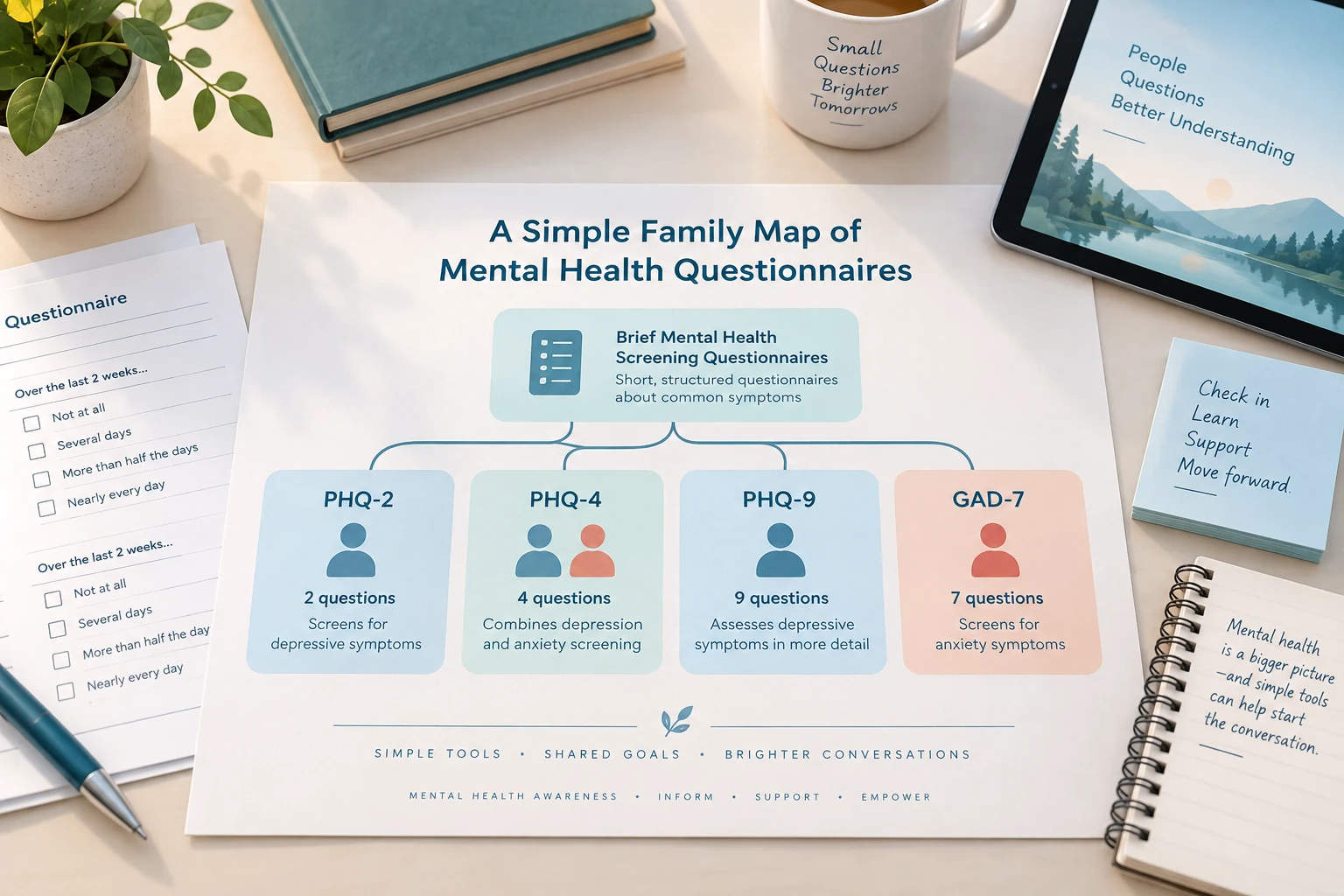
Meaning of the PHQ Patient Health Questionnaire
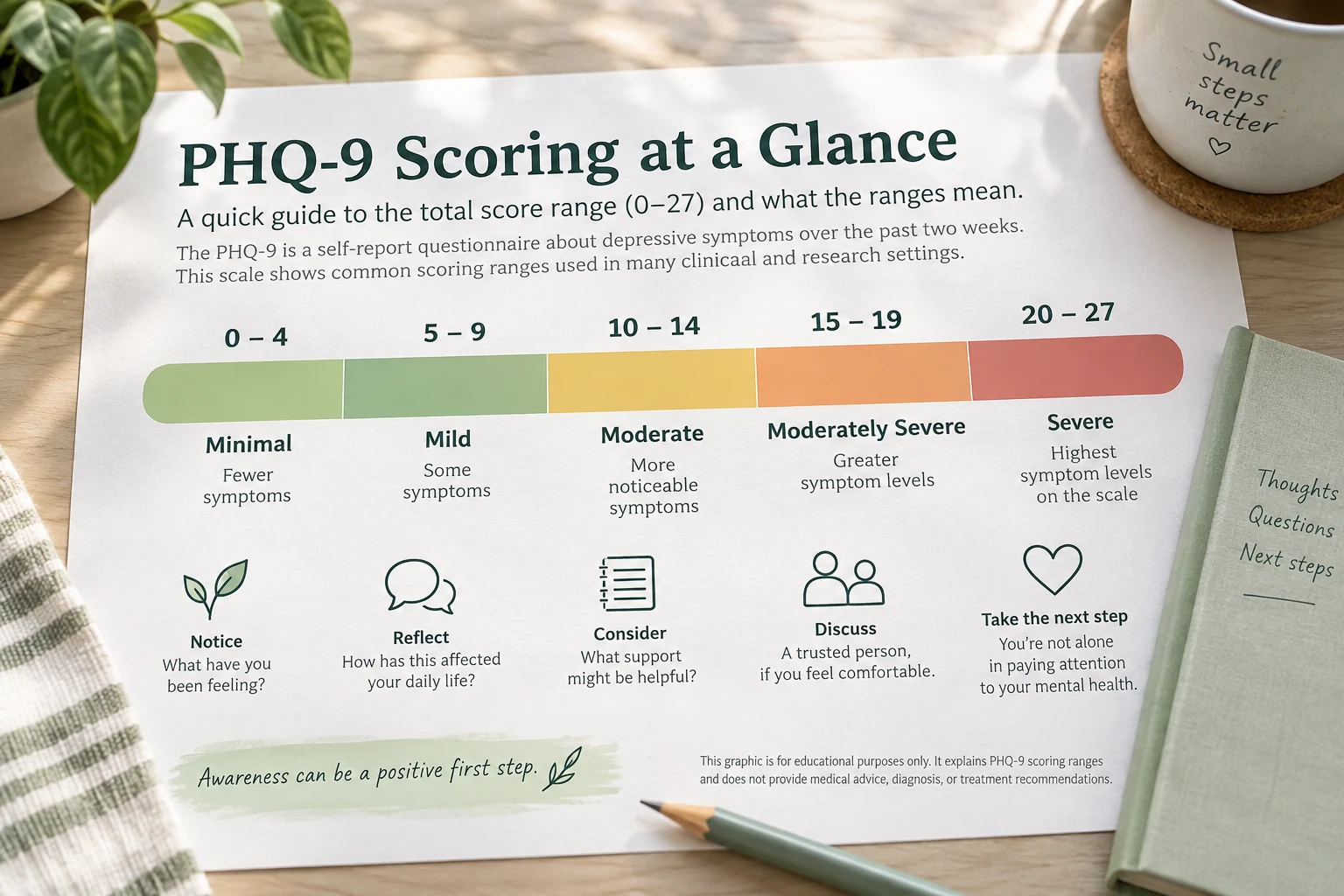
PHQ stands for Patient Health Questionnaire. It grew from PRIME-MD, a primary care tool created to help health professionals ask structured questions about common mental health concerns. Shorter PHQ forms became common because they are quick to complete and easy to score. PHQ-9 asks about nine depression-related symptoms during the past two weeks. Each item is scored from 0 to 3, for a total from 0 to 27, usually grouped as 0-4 minimal, 5-9 mild, 10-14 moderate, 15-19 moderately severe, and 20-27 severe. Sleep, grief, stress, chronic illness, medication, substance use, work strain, and difficult life periods can all affect the score.
Main PHQ Forms at a Glance
Search results often mix “PHQ pdf,” “patient health questionnaire pdf,” “PHQ-9 scoring,” and “patient health questionnaire-2,” so purpose matters. PHQ-2 focuses on low mood and loss of interest or pleasure. PHQ-9 gives a broader depression symptom picture, including sleep, energy, appetite, self-perception, concentration, slowed movement or restlessness, and thoughts of self-harm. PHQ-4 combines two PHQ-2 items with two GAD-2 anxiety items. GAD-7 is not a PHQ depression form, but it often appears beside PHQ-9 because anxiety and depression can overlap.
| Form type | Primary purpose | Typical use case |
|---|---|---|
| PHQ-2 | Two central signs of depression | Short first review when time is limited |
| PHQ-9 | Nine depression-related signs | Severity estimate and follow-up conversation |
| PHQ-4 | Two depression items plus two anxiety items | Very brief emotional-distress review |
| GAD-7 | Seven anxiety-related signs | Estimate of anxiety symptom severity |
PHQ-9 Scoring Without Reading Too Much Into the Number
A PHQ-9 score adds the response values for all nine questions. Common threshold points are 5, 10, 15, and 20. The number should be handled carefully: 8 and 9 are both in the mild range, but the lived experience may differ, and 10 is a screening signal rather than a final decision. Look beyond the total and notice which items were highest. If item 9 about self-harm thoughts is above 0, it deserves immediate compassionate attention. If you may be in danger or may harm yourself, contact local emergency services or a crisis line in your country right away. The PHQ-9 self-assessment home page can help organize answers for discussion with a clinician or counselor.
When a PDF Helps and When an Online Form Helps
A patient health questionnaire PDF helps when you need a printable copy, want to bring a form to an appointment, or need a clinic workflow version. An online PHQ-9 form helps when you want automatic scoring, readable ranges, and a guided experience, though you should understand privacy handling and tool limitations. The best format is the one you can complete honestly and review calmly; value comes from accurate answers, context, and thoughtful follow-up.
| Need | Practical option |
|---|---|
| A quick first review | PHQ-2 or PHQ-4 |
| A severity score for depression symptoms | PHQ-9 |
| Added anxiety context | GAD-7 beside PHQ-9 |
| A document to bring to an appointment | A printable PHQ-9 PDF |
| Automatic scoring with reflection | A careful online PHQ-9 form |

How to Choose Between PHQ-2, PHQ-4, PHQ-9, and GAD-7
Choose the tool by the question you are asking. PHQ-2 is the briefest depression-focused first step. PHQ-9 is usually better for understanding current depression-related severity because it provides a fuller symptom profile and a 0-27 score. PHQ-4, or PHQ-9 with GAD-7, may be more informative when both depression and anxiety symptoms may be present. To share results with a professional, write down the form name, date, score, highest items, and a few notes about what was happening in your life that week.
A Gentle Way to Read Your Result
Before interpreting any PHQ score, pause for context. The questionnaire asks about the past two weeks, not your whole identity or future. A high score can feel heavy but is still information; a low score can reassure but does not mean you should ignore distress that feels significant. Read the result in three layers: the score range, the symptom pattern, and real-life effects on mood, energy, sleep, work, relationships, or safety.
- Severity band: Where does the total score sit overall?
- Symptom profile: Which specific items stand out most?
- Daily impact: How are mood, energy, sleep, work, relationships, or safety being affected?
What to Do Next With the PHQ Patient Health Questionnaire
The phq patient health questionnaire is most helpful when it leads to a constructive next step. You might save your score, repeat the same form later, write notes about patterns, or discuss the result with a doctor, therapist, school counselor, or other qualified professional. For a low-pressure way to organize a PHQ-9 score, you can review a private mood screening tool. Keep it in perspective: it is an educational aid, not a medical diagnosis, and it works best with human support when symptoms persist, intensify, or affect safety.

FAQ
What is the PHQ-9 Patient Health Questionnaire?
PHQ-9 is a nine-item depression symptom questionnaire. It asks how often specific symptoms bothered you during the past two weeks, then adds the responses into a 0-27 score. It is commonly used in primary care, counseling, research, and self-reflection.
What is a normal PHQ score?
Many guides describe 0-4 as the minimal symptom range. The word “normal” can be misleading: a low score can still matter if one symptom feels serious, and a higher score is not a personal failure. The score is a prompt for understanding, not a judgment.
Is the PHQ-9 still used?
Yes. PHQ-9 remains widely used because it is brief, structured, and supported by a large research history. It is often used to screen for depression symptoms, estimate severity, and track change over time when repeated.
Is PHQ-9 free to use?
Official PHQ screeners are widely available, and the PHQ screeners site states that PHQ and GAD-7 screeners and translations can be downloaded without permission requirements. If you use forms in an organization, clinic, or product, it is still wise to check local policy and documentation needs.
Is PHQ-2 the same as PHQ-9?
No. PHQ-2 is a short first step built around two central depression questions. PHQ-9 keeps those themes and adds seven further symptom areas, giving a broader score and a clearer symptom pattern.
Should I use GAD-7 with PHQ-9?
It may help when anxiety symptoms are part of what worries you. PHQ-9 looks mainly at depression symptoms, while GAD-7 looks at anxiety symptoms, and together they can give a wider picture for discussion with a qualified professional.