How to Measure Depression: Scales, Scores, and Next Steps
If you are searching for how to measure depression, you may be trying to turn a heavy, confusing experience into something clearer. That is a reasonable first step. Depression can affect mood, sleep, energy, appetite, concentration, self-worth, and daily functioning, so measuring it usually means looking at patterns rather than relying on one bad day. A structured questionnaire, symptom notes, and a conversation with a qualified professional can work together. For a private starting point, an online PHQ-9 self-check can help you organize recent symptoms without treating the result as a final answer.

What Measuring Depression Really Means
Measuring depression is not the same as proving what is happening inside you. It is a structured way to describe symptoms, severity, duration, and impact. Good measurement asks four questions: what symptoms are present, how often they have appeared, how intense they feel, and how much they interfere with life.
This matters because depression is not only sadness. Some people mainly notice exhaustion, sleep disruption, irritability, low motivation, slower thinking, appetite changes, guilt, or loss of interest in things that used to matter. Others can keep functioning outwardly while feeling flat or overwhelmed privately. A measurement tool helps make those patterns visible.
Most depression scales use a recent time window. The PHQ-9 asks about the past two weeks. The K10 asks about psychological distress over the past four weeks. Clinician-rated tools such as the Hamilton Depression Rating Scale often involve an interview and professional judgment. The time window is important because depression severity is about persistence and pattern, not a single emotional snapshot.
How to Measure Depression Level With the PHQ-9
The PHQ-9, or Patient Health Questionnaire-9, is one of the most commonly used self-report tools for measuring depression symptom severity. It has nine items, each scored from 0 to 3 based on how often a symptom has been present in the past two weeks. The total score ranges from 0 to 27.
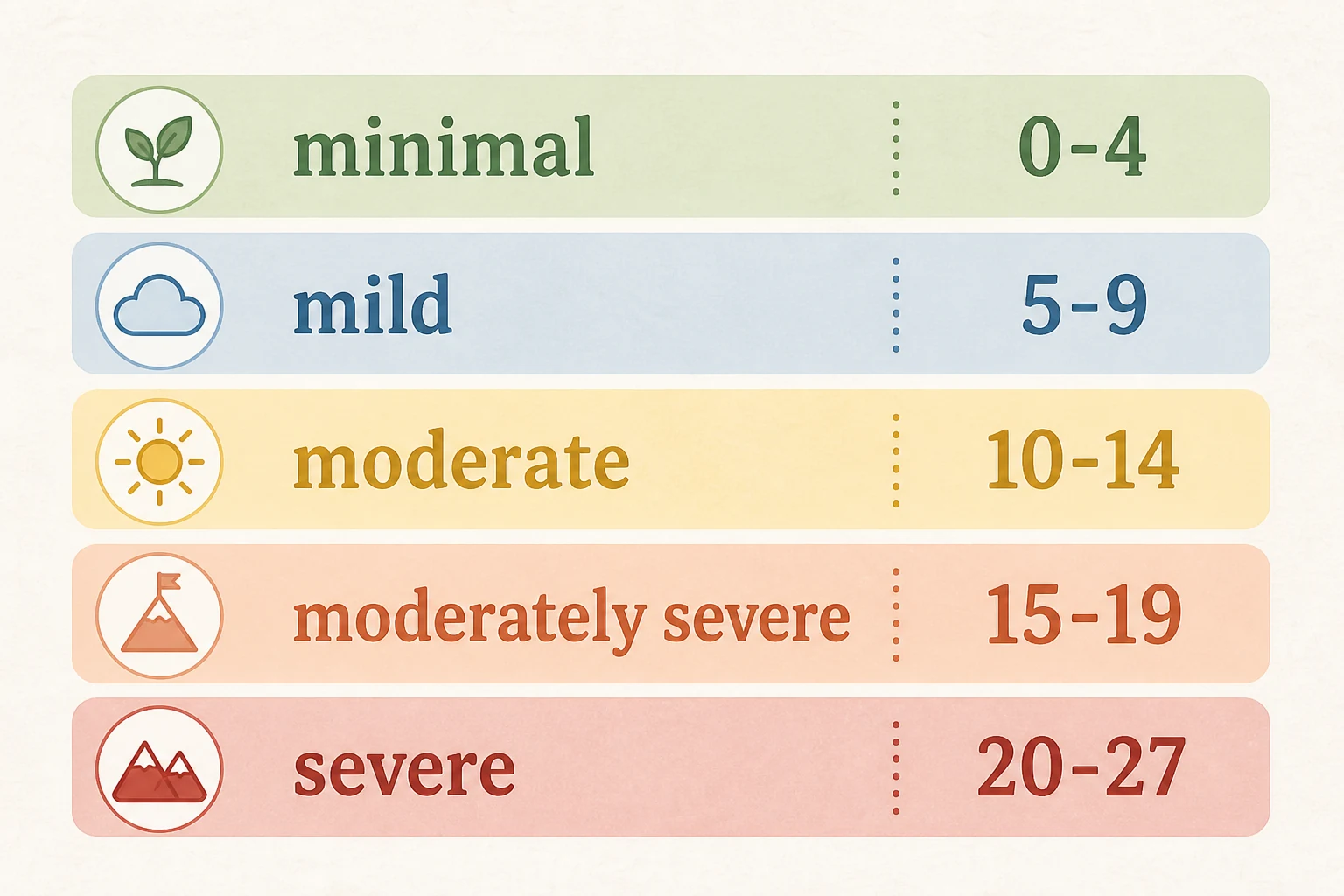
The usual PHQ-9 scoring bands are:
- 0 to 4: minimal symptoms
- 5 to 9: mild symptoms
- 10 to 14: moderate symptoms
- 15 to 19: moderately severe symptoms
- 20 to 27: severe symptoms
These bands are useful because they turn separate symptoms into a shared language. A score can help you notice whether symptoms are light, building, or strongly affecting daily life. It can also help you prepare for a primary care visit, therapy intake, or follow-up appointment.
Still, the number should be read with context. A score of 8 with major work, school, parenting, or relationship disruption deserves attention. A score of 14 after several nights of acute stress may need a different conversation than the same score lasting for months. The PHQ-9 symptom score is best viewed as a starting map, not the whole landscape.
How to Calculate a Depression Score Safely
To calculate a PHQ-9 style depression score, each answer receives a number:
- Not at all: 0
- Several days: 1
- More than half the days: 2
- Nearly every day: 3
Add the nine item scores together. That total is the score. For example, if your answers add up to 12, the score falls in the moderate range. If the total is 18, it falls in the moderately severe range. This is what people often mean when they ask how to compute depression or how to calculate depression.
The calculation is simple, but interpretation is more careful. Look at the total, then look back at the individual items. Sleep and appetite changes can be influenced by medical conditions, medication, shift work, caregiving, grief, chronic pain, or stress. Concentration problems can overlap with anxiety, burnout, attention difficulties, or lack of sleep. A screening score can show that something deserves attention, but a professional assessment can explore what may be contributing.
One item on the PHQ-9 asks about thoughts of death or self-harm. If that item is anything above zero, treat it as important information to share with a qualified professional or trusted support person. If there is immediate danger, contact local emergency services or urgent crisis support in your area.
Depression Measurement Scale Options
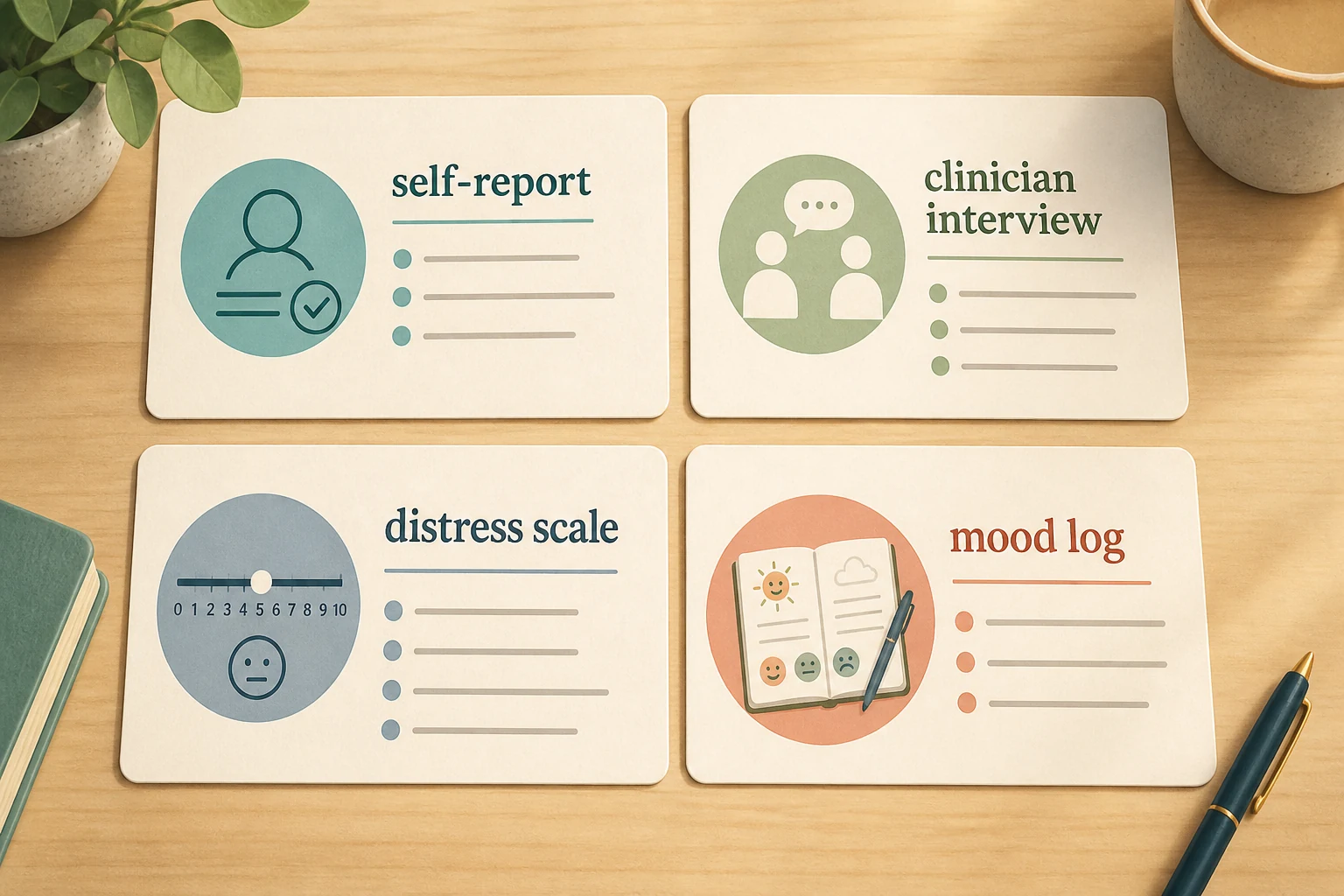
There is no single best depression measurement scale for every purpose. Different tools answer different questions.
The PHQ-9 is short, widely used, and easy to score. It is often helpful for self-reflection, primary care screening, and tracking symptom changes over time. The PHQ-2 is even shorter and asks about low mood and loss of interest. It can be useful as a first screen, but a fuller tool is usually needed when symptoms are present.
The Hamilton Depression Rating Scale, sometimes called HAM-D or HDRS, is clinician-administered. It is more common in clinical settings and research because it relies on trained observation and interview. The Beck Depression Inventory is another well-known self-report questionnaire, often used in clinical and research contexts. The K10 measures general psychological distress, so it can include anxiety and depression-related distress rather than depression symptoms alone.
For children, adolescents, pregnancy, postpartum periods, older adults, and people with chronic medical conditions, tool choice matters. Some standard questions may overlap with normal developmental changes, pregnancy-related sleep disruption, medication effects, or physical illness. That does not make measurement useless. It means the score should be interpreted in the right context.
What Are the DSM-5 Criteria in Plain Language?
People often ask about DSM-5 criteria when they are trying to understand whether their symptoms are serious. In plain language, a clinical assessment considers whether symptoms such as depressed mood, loss of interest or pleasure, sleep changes, appetite or weight changes, low energy, concentration problems, feelings of worthlessness or excessive guilt, observable slowing or agitation, and thoughts of death or self-harm have persisted and caused meaningful distress or impairment.
For a major depressive episode, professional criteria look for a cluster of symptoms over at least two weeks, with either depressed mood or loss of interest usually being central. They also consider whether symptoms are better explained by substances, a medical condition, bereavement context, bipolar-spectrum history, or another mental health condition.
That is why a questionnaire and a clinical conversation are different. A questionnaire counts reported symptoms. A clinical assessment asks follow-up questions, checks safety, considers medical and life context, and explores patterns over time.
How Severe Is My Depression? A Practical Way to Think About Severity
Severity is not only a score band. It is the relationship between symptoms and life. Ask yourself:
- How many symptoms are showing up?
- How often have they been present over the past two weeks?
- How intense do they feel?
- Are they affecting work, school, caregiving, hygiene, eating, sleep, relationships, or basic routines?
- Are symptoms getting better, staying the same, or becoming harder to manage?
A mild score with stable routines may call for monitoring, supportive habits, and a plan to talk with someone if symptoms continue. A moderate score may be a reason to schedule a conversation with a primary care clinician, therapist, counselor, or other qualified professional. Higher scores, sharp worsening, major impairment, or any self-harm thoughts deserve more urgent support.
Try to avoid judging yourself by the number. A score is not a character statement. It is a piece of information about what you have been carrying lately.
Five Signs Worth Tracking
If you are unsure how to check depression level between questionnaires, track a few daily-life signals. These do not replace a structured scale, but they help you notice patterns.
- Mood: sadness, emptiness, irritability, or numbness that keeps returning.
- Interest: less pleasure or motivation for activities that normally matter to you.
- Energy and sleep: fatigue, sleeping too much, insomnia, or feeling slowed down.
- Thinking: trouble concentrating, remembering, deciding, or believing things can improve.
- Functioning: difficulty keeping up with work, school, home responsibilities, hygiene, relationships, or basic routines.
You can also note context. Did symptoms change after a loss, conflict, illness, medication change, seasonal shift, major stressor, or substance use change? Patterns like these can make a professional conversation more useful.
Use Scores as a Conversation Starter
The safest way to use depression measurement is to combine three things: a structured scale, a brief symptom journal, and support from a qualified person when symptoms persist or interfere with life. Bring the score, the date, the time window, and a few examples of daily impact. For example: "My score was 13 today, and the hardest parts have been sleep, concentration, and getting basic tasks done."
If you repeat a scale, use the same tool at similar intervals instead of switching constantly. Weekly or every two weeks can be useful for some people, while daily scoring may become stressful. If tracking makes you more anxious, simplify it. A short note about mood, sleep, energy, and functioning may be enough.
When you want a gentle place to begin, a private PHQ-9 reflection tool can help you organize symptoms before deciding what support to seek. Use it as information, then pair it with human judgment, especially if symptoms are persistent, worsening, or affecting safety.
FAQ
How do I measure depression at home?
You can start with a validated self-report questionnaire such as the PHQ-9, then add brief notes about sleep, appetite, energy, concentration, mood, and daily functioning. Home measurement is best used for self-reflection and preparation for a professional conversation, not as a final clinical answer.
How do I check my depression level?
Use a consistent tool with a clear time window. The PHQ-9 asks about the past two weeks and creates a 0 to 27 score. Then compare the score with how your life is actually being affected. If symptoms persist, worsen, or disrupt daily responsibilities, consider reaching out to a qualified professional.
Is a depression rating scale from 1 to 10 enough?
A 1 to 10 rating can be useful for quick mood tracking, but it is usually too broad to measure depression well. Structured tools ask about specific symptoms, frequency, and impact. A simple rating works best as a supplement to a fuller questionnaire or journal.
What is the difference between PHQ-2 and PHQ-9?
The PHQ-2 asks two core questions about low mood and loss of interest. The PHQ-9 includes nine symptom areas and gives a broader severity score. The PHQ-2 can be a quick first screen, while the PHQ-9 gives more detail for reflection and follow-up.
Can a questionnaire tell how severe my depression is?
A questionnaire can estimate symptom severity, but it cannot capture every factor that matters. Duration, impairment, safety, medical history, medications, grief, substance use, and anxiety symptoms can all affect interpretation. A score is most useful when paired with context.
What are five signs of depression to notice?
Common signs include persistent low or irritable mood, loss of interest, fatigue or sleep changes, appetite changes, concentration problems, feelings of worthlessness or guilt, and difficulty functioning. If any signs include thoughts of self-harm or immediate danger, seek urgent local support.
How often should I retest?
If you are monitoring symptoms, using the same scale every one to two weeks is often more meaningful than checking repeatedly in one day. If you are in care, follow the interval suggested by your clinician. If tracking increases distress, pause and discuss a simpler approach with support.