Mental Health Screening — What It Is, Why It Matters, and How to Start
Something has felt different lately. Maybe your energy is lower than usual, sleep doesn't come easy, or a quiet worry follows you through the day. If you've been wondering whether what you're feeling deserves attention, a mental health screening can help you find some clarity. It's a simple, low-pressure way to check in with your emotional well-being — and it's often the first step people take before deciding whether to speak with a professional. In this guide, you'll learn what a mental health screening actually involves, the most common tools used, who should consider one, and how to explore a free PHQ-9 emotional check-up from the comfort of your own home.
What Is a Mental Health Screening?
A mental health screening is a brief check-up for your emotional and psychological health. It typically uses a set of standardized questions to look for early signs of common conditions like depression, anxiety, or excessive stress.
Think of it like a routine health check — but for your mind. It doesn't tell you exactly what's wrong. Instead, it gives you a snapshot of how you're doing right now and whether a deeper conversation with a professional might be helpful.
Mental health screenings are used in doctor's offices, schools, community health centers, and increasingly online. They're designed to be quick, accessible, and private. Most take less than 10 minutes and don't require a referral or appointment.
The key thing to remember is this: a screening is not a diagnosis. It's a starting point — a way to check in with yourself and gather information before deciding what to do next.
How a Screening Differs from a Diagnosis
A mental health screening and a clinical diagnosis serve very different purposes. A screening uses brief questionnaires to flag potential concerns. A diagnosis, on the other hand, involves a thorough evaluation by a licensed professional — often including interviews, medical history review, and sometimes lab tests.
Here's a quick comparison:
| Screening | Diagnosis | |
|---|---|---|
| Purpose | Identify potential signs | Confirm a specific condition |
| Who does it | Self-administered or primary care provider | Licensed mental health professional |
| Time | 5–10 minutes | 30–90 minutes or more |
| Outcome | Score or risk level | Clinical conclusion and treatment plan |
A screening can prompt you to seek a professional evaluation, but it cannot replace one. This distinction matters — especially for topics related to mental health, where accuracy and context are everything.
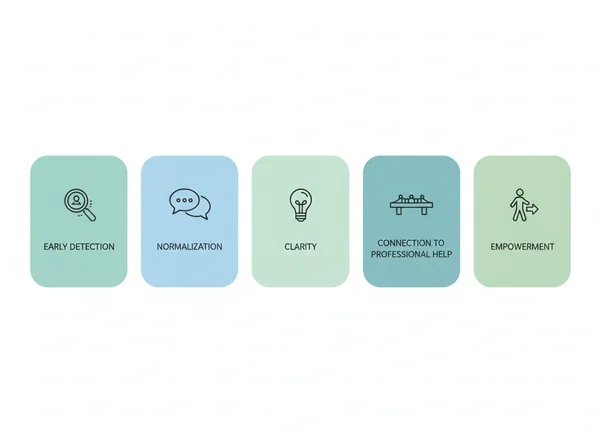
Why Mental Health Screening Matters — 5 Key Benefits
You might wonder whether a quick questionnaire can really make a difference. The answer is yes — and here's why mental health screening matters.
-
Early detection leads to better outcomes. Mental health conditions often develop gradually. A screening can catch early warning signs before they become harder to manage. Research consistently shows that earlier intervention leads to more effective treatment.
-
It helps normalize mental health conversations. Taking a screening signals that checking in on your emotional health is just as valid as checking your blood pressure. Over time, this reduces the stigma that still prevents many people from seeking support.
-
You gain clarity about what you're experiencing. Sometimes emotions feel confusing. A structured screening helps you put your experience into perspective — not by labeling you, but by highlighting patterns that deserve attention.
-
It creates a bridge to professional support. If your screening results suggest moderate or higher levels of distress, you have something concrete to share with a doctor or counselor. This makes the first appointment less intimidating.
-
It empowers you to take action. Knowledge is the first step toward change. Whether your results are reassuring or concerning, a screening gives you a clearer picture so you can decide what to do next — on your terms.
Common Mental Health Screening Tools You Should Know
Mental health screening tools are standardized questionnaires developed by researchers and clinicians. Each tool focuses on a specific area of mental health and has been tested for reliability. Here are the most widely recognized ones.
PHQ-9 — Depression Screening
The Patient Health Questionnaire-9 (PHQ-9) is the most commonly used screening tool for depression worldwide. It asks nine questions about symptoms you may have experienced over the past two weeks — such as low mood, sleep changes, fatigue, and difficulty concentrating.
Each response is scored from 0 to 3, and the total score ranges from 0 to 27. Higher scores suggest more severe symptoms. The PHQ-9 is widely used in primary care, mental health clinics, and online platforms like PHQ-9.org.
However, a PHQ-9 score on its own doesn't confirm a diagnosis. It's a screening tool that helps you and your provider understand the severity of your symptoms — and it's a solid starting point for any conversation about depression.
GAD-7 — Anxiety Screening
The Generalized Anxiety Disorder 7-item scale (GAD-7) focuses on anxiety symptoms. It asks about excessive worry, restlessness, irritability, and trouble relaxing over the past two weeks.
Like the PHQ-9, it's scored on a 0–21 scale and is widely used in both clinical and online settings. The GAD-7 can also help flag signs of panic disorder, social anxiety, and post-traumatic stress — though a professional evaluation is needed for a specific diagnosis.
Other Widely Used Screening Questionnaires
Beyond the PHQ-9 and GAD-7, several other mental health screening tools serve different purposes:
- Columbia-Suicide Severity Rating Scale (C-SSRS): Assesses suicide risk through structured questions about thoughts and behaviors.
- DASS-21: Measures depression, anxiety, and stress across 21 items.
- Insomnia Severity Index (ISI): Evaluates the nature and impact of sleep difficulties.
- Mood Disorder Questionnaire (MDQ): Screens for symptoms related to bipolar disorder.
The right tool depends on what you want to explore. For a general emotional check-in, tools like the PHQ-9 are an excellent place to begin.
What Happens During a Mental Health Screening?
Not knowing what to expect can create unnecessary anxiety. In reality, most mental health screenings are straightforward and take very little time.
During a screening, you'll answer questions about how you've been feeling over a recent period — usually the past two weeks. These questions focus on your mood, energy, sleep, appetite, concentration, and overall sense of well-being.
There are no right or wrong answers. The goal is simply to capture an honest picture of your current emotional state. Being open and truthful leads to more useful results.
What Questions Are Typically Asked?
Questions vary depending on the screening tool, but common themes include:
- How often have you felt little interest or pleasure in doing things?
- How often have you felt down, depressed, or hopeless?
- Have you had trouble falling asleep, staying asleep, or sleeping too much?
- Have you felt tired or had little energy?
- How often have you felt nervous, anxious, or on edge?
- Have you had difficulty controlling your worrying?
These questions are designed to be simple and specific. They don't require you to share personal stories or explain complex situations — just reflect on recent experiences.
How Long Does a Screening Take?
Most mental health screenings take between 5 and 10 minutes. Some shorter tools, like the PHQ-2 (a brief version of the PHQ-9), can be completed in under two minutes.
Online screenings are typically self-paced, so you can take your time. There's no time limit and no pressure to rush.
Who Should Consider a Mental Health Screening?
The short answer: anyone can benefit from a mental health screening. Just like you don't need to feel sick to visit a doctor for a physical, you don't need to be in crisis to check in on your mental health.
However, a screening may be especially helpful if you've noticed changes that concern you — even if you can't quite put them into words. Life transitions, prolonged stress, loss, or simply feeling "not yourself" for weeks at a time are all valid reasons to take a closer look.
Mental health screenings are also valuable for people living with chronic conditions like diabetes, heart disease, or cancer. Depression and anxiety are common companions to chronic illness, and routine screening can help catch those patterns early.
A Quick Self-Reflection Checklist
Consider a mental health screening if you've experienced any of the following for two weeks or more:
- Persistent sadness, emptiness, or tearfulness
- Loss of interest in activities you used to enjoy
- Significant changes in sleep — too much or too little
- Constant fatigue or low energy
- Difficulty concentrating or making decisions
- Ongoing worry or nervousness that feels hard to control
- Withdrawal from friends, family, or social activities
- Feeling overwhelmed by daily responsibilities
Checking even one or two of these doesn't mean something is wrong. It simply means a screening might offer you some useful perspective.
How to Take a Mental Health Screening Online
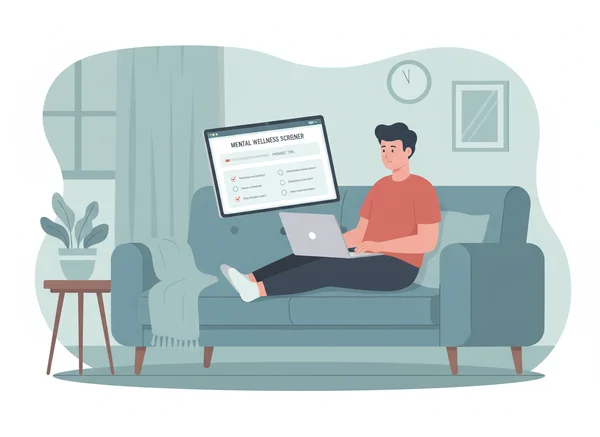
Online mental health screening has become one of the most accessible ways to begin understanding your emotional well-being. You don't need an appointment, a referral, or even to leave your home.
Many reputable organizations and platforms offer free, confidential online screenings. The key is knowing what makes a tool trustworthy — and how to use your results wisely.
What to Look for in an Online Screening Tool
When choosing an online mental health screening tool, look for these features:
- Clinically validated questionnaires: The tool should use established instruments like the PHQ-9, GAD-7, or DASS-21 — not informal quizzes with no research backing.
- Privacy and confidentiality: Your responses should be kept secure. Look for clear privacy policies and platforms that don't require account creation.
- Clear disclaimers: A trustworthy tool will always state that screening results are for informational purposes only and do not replace professional advice.
- Actionable follow-up guidance: Good tools don't just give you a score — they explain what it means and suggest next steps.
How PHQ-9.org Supports Your Emotional Check-Up
PHQ-9.org provides a free, confidential online screening based on the clinically validated PHQ-9 questionnaire. The process takes less than five minutes, requires no registration, and is available in over 15 languages.
What sets PHQ-9.org apart is its optional AI-personalized report. After completing the standard screening, you can choose to answer a few additional questions. Based on your responses, the platform generates a deeper analysis that includes personal strengths, potential areas of challenge, impact on daily life, and actionable recommendations.
This screening is not a diagnosis. It's a self-reflection tool designed to help you organize your thoughts and better understand your emotional well-being — not to replace a professional evaluation.
Whether you're checking in for the first time or monitoring your mood over time, an online screening can serve as a comfortable and private first step.
What to Do After Your Mental Health Screening Results
Completing a mental health screening is a meaningful step. But what comes next matters just as much.
First, take a moment to sit with your results. Avoid jumping to conclusions. A low score doesn't mean everything is perfect, and a higher score doesn't mean something is definitely wrong. Screening results are one data point — not the full picture.
Here are practical next steps based on your results:
- Minimal or low symptoms: Your results are encouraging. Continue checking in with yourself periodically. Consider retaking the screening every few months if you want to track your well-being over time.
- Moderate symptoms: Pay attention to how you've been feeling. It may be helpful to share your results with a trusted friend, family member, or healthcare provider. A follow-up conversation can help you decide whether additional support would be beneficial.
- Moderately severe to severe symptoms: Consider reaching out to a mental health professional. Your screening results can serve as a useful conversation starter — something concrete to bring to an appointment.
When Your Results Suggest Talking to a Professional
A screening doesn't replace professional guidance, but it can point you in the right direction. You may want to talk to a professional if:
- Your score suggests moderate to severe symptoms
- Your symptoms have lasted more than two weeks
- They interfere with work, relationships, or daily life
- You've noticed your coping strategies aren't working as well as they used to
Remember: seeking help is a sign of strength, not weakness. Mental health professionals are trained to help you understand your experience and explore options that fit your needs.

Taking the First Step Toward Understanding Your Mental Health
Mental health screening isn't about finding a label or confirming a worst-case scenario. It's about giving yourself permission to check in — honestly and without judgment.
Here are the key points to take with you:
- A mental health screening is a quick, non-diagnostic tool that helps you understand your emotional well-being.
- Common tools like the PHQ-9 and GAD-7 are clinically validated and widely trusted.
- Screenings are available online, for free, and take just minutes to complete.
- Your results are a starting point for reflection — not a final answer.
- Sharing your results with a professional can make asking for help feel easier.
If anything in this article resonated with you, consider taking a few minutes to try a confidential emotional check-up at PHQ-9.org. It's free, private, and designed to help you take one small step toward understanding yourself better.
If you or someone you know is in crisis, please reach out to a mental health professional or contact the 988 Suicide & Crisis Lifeline by calling or texting 988.
Frequently Asked Questions
What are the limitations of a mental health screening?
A mental health screening provides a snapshot of your current emotional state — not a clinical diagnosis. It cannot account for medical conditions, life context, or the full range of factors a professional would consider. Always interpret results as informational, and follow up with a healthcare provider for a complete evaluation.
How often should you take a mental health screening?
There's no strict rule, but checking in every few months can help you notice patterns over time. If you've experienced a major life change, ongoing stress, or new emotional symptoms, taking a screening sooner may be worthwhile.
Can a screening tell you exactly what condition you have?
No. A screening identifies potential signs of concern, but it cannot confirm a specific condition. Only a licensed mental health professional can provide a diagnosis after a comprehensive evaluation.
How accurate are mental health screening tools?
Clinically validated tools like the PHQ-9 and GAD-7 have strong reliability and are widely used in healthcare settings. However, no screening tool is perfect. Results depend on honest self-reporting and should always be considered alongside professional input.
Do you need a referral to get a mental health screening?
No. Many mental health screenings are available without a referral. You can take one at a primary care visit, through a community health center, or online using platforms like PHQ-9.org. No appointment or registration is needed for most online tools.
What is the difference between a screening and a full mental health evaluation?
A screening is a brief, standardized check using a questionnaire — it takes minutes. A full mental health evaluation is a detailed assessment conducted by a licensed professional, often lasting 30 to 90 minutes or more. The evaluation may include clinical interviews, behavioral observation, and a review of your medical and personal history. A screening may lead to an evaluation, but they serve different purposes.