PHQ 9 Age Range Guide for PHQ-9, PHQ-A, and Teen Screening
If you are searching for "PHQ 9 age," you are probably trying to answer a simple but important question: who is this depression screening tool meant for? The short answer is that the standard PHQ-9 is most often discussed for adults and is also used in many adolescent care settings, especially from about age 12 and older. For younger teens, clinicians and schools may prefer PHQ-A or a PHQ-9 modified for teens because the wording and follow-up questions better fit adolescent life. If you want a gentle place to understand the standard tool, a private PHQ-9 screening starting point can help you see how the nine questions are organized.
This guide explains age range, PHQ-A vs PHQ-9, pediatric cautions, and what a parent, teen, or care team can do with a score without treating it as a final answer.
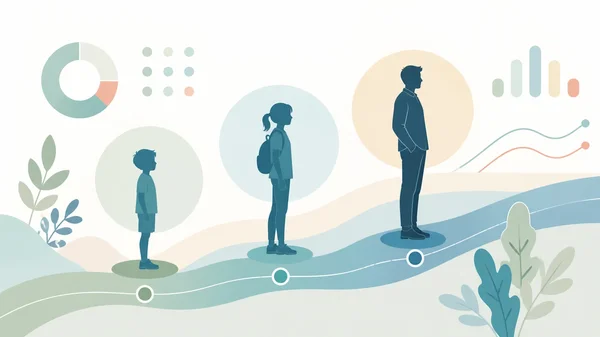
What Age Is PHQ-9 Usually Used For?
The PHQ-9 is a nine-item questionnaire that asks about depressive symptoms over a recent time window. It produces a total score from 0 to 27, with higher scores reflecting more symptoms. The tool is used in adult primary care, mental health care, research, and symptom monitoring. In many health systems, it is also used with adolescents when the process includes age-appropriate follow-up.
The age range can be confusing because different sources describe it in different ways. A practical summary looks like this:
| Age group | Common screening fit | Important caution |
|---|---|---|
| 11 and younger | Usually not the default PHQ-9 audience | A child-focused professional assessment is more appropriate |
| 12-17 | Often screened with PHQ-A, PHQ-9 modified for teens, or adolescent PHQ-9 workflows | Scores need adult support and clinical follow-up |
| 18 and older | Standard PHQ-9 is commonly used | A score is a screening signal, not a clinical conclusion |
For people searching "phq 9 age range," the most useful answer is not a single universal cutoff. It is a decision about setting, version, and support. An adult using a standard online PHQ-9 is different from a 12-year-old being screened in a pediatric clinic, and both are different from a school wellness program using a teen-specific form.
PHQ-A vs PHQ-9 for Adolescents
PHQ-A stands for Patient Health Questionnaire for Adolescents. It is related to the PHQ family, but it is designed around adolescent needs. Some forms are called PHQ-9 modified for teens, PHQ-9A, or PHQ-A. In ordinary search behavior, people may use these names loosely, which is why "phq-a pdf," "phq-9 modified for adolescent pdf," and "phq 9 pediatrics pdf" often appear together.
The main difference is not that one is "real" and the other is not. The difference is fit. A teen-focused version may include wording about irritability, schoolwork, functioning, and follow-up items that matter in youth care. It may also include clearer instructions for adults reviewing the response. If a teen answers positively to an item about self-harm, that response should be treated as a prompt for immediate supportive follow-up by a qualified adult or health professional.
The standard PHQ-9 still matters for adolescents because many pediatric and quality-measure programs use PHQ-9 scoring structures for ages 12 and older. However, when a young person is involved, the form should be chosen by someone who understands adolescent screening, consent, privacy, safety planning, and local clinical requirements.
If you are reviewing scores for yourself or preparing to talk with a professional, the PHQ-9 self-reflection tool can make the standard nine-item structure easier to understand before you discuss next steps.
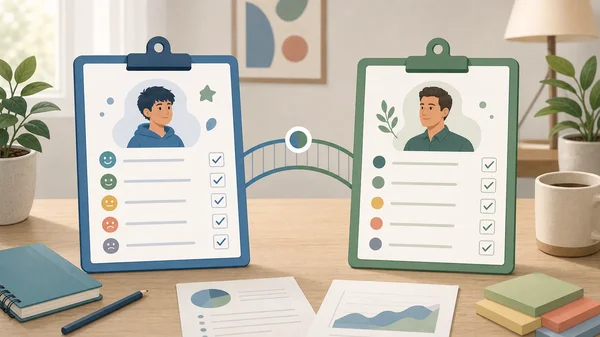
How Age Changes Screening Conversations
Age changes more than the name of the form. It changes how questions are explained, who should review the result, and what kind of support should be available afterward.
For adults, a PHQ-9 score can be a useful way to organize recent mood, sleep, appetite, energy, concentration, and self-worth concerns. Adults can bring the score to a primary care clinician, therapist, psychiatrist, or other qualified professional. The score may also help track change over time when used consistently.
For teens, the screening conversation should be more supported. A 13-year-old may not have the words to describe sadness, numbness, irritability, pressure at school, family stress, or changes in sleep. A questionnaire can open the door, but it should not become the only door. A caring adult can ask what the teen meant by an answer, whether the symptom is new, and whether the teen feels safe.
For younger children, especially those under 12, the PHQ-9 is usually not the first choice for independent self-screening. Children may express depression through irritability, stomachaches, school refusal, clinginess, behavior changes, sleep problems, or loss of interest. A pediatrician or child mental health professional can choose tools that fit the child's age and development.
PHQ-9 Adolescent Scoring Without Overreading the Number
PHQ-9 adolescent scoring often uses the same 0 to 27 total score structure as the standard PHQ-9. The common score bands are:
| Score | Usual severity label |
|---|---|
| 0-4 | None or minimal |
| 5-9 | Mild |
| 10-14 | Moderate |
| 15-19 | Moderately severe |
| 20-27 | Severe |
These labels can be helpful, but they are not the whole story. Age, context, functioning, risk, and symptom pattern all matter. A teen with a lower total score may still need help if one response involves self-harm, major sleep disruption, bullying, trauma, substance use, or sudden behavior change. A higher score deserves careful attention, but it still needs a human review rather than a rushed interpretation.
The most age-sensitive part of PHQ-9 use is not the math. It is what happens after the score. A safe workflow answers four questions:
- Is the person safe today?
- Is there any response about self-harm or wanting to be dead?
- Is the score affecting school, work, relationships, or daily functioning?
- Who is the right professional or trusted adult to involve next?
If there is any immediate danger, potential self-harm, or concern that someone cannot stay safe, contact local emergency services, a crisis hotline, or an urgent care resource in your area.
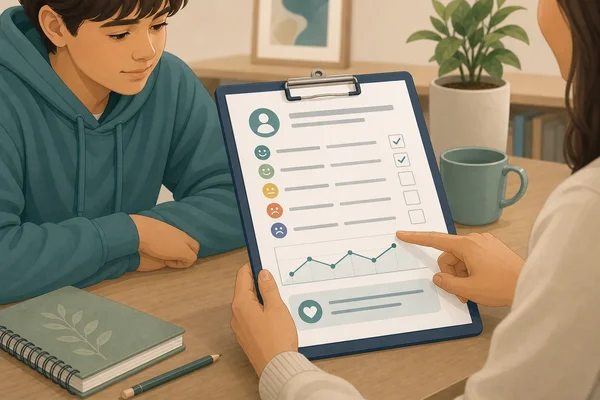
A Practical Age Checklist for Families and Care Teams
Use this checklist when deciding whether PHQ-9, PHQ-A, or another tool makes sense.
- For an adult, the standard PHQ-9 is often appropriate as a screening and tracking measure.
- For a 17-year-old, PHQ-A or PHQ-9 modified for teens may fit better than an adult-only form, especially in pediatric or school settings.
- For a 13-year-old, use a teen-focused process with adult support, privacy awareness, and follow-up.
- For a 12-year-old, screening may be appropriate in pediatric care, but the exact tool and next steps should be age-aware.
- For a child under 12, ask a pediatrician or child mental health professional which tool fits the child's development.
- For anyone with self-harm thoughts, skip casual interpretation and seek immediate professional or crisis support.
It also helps to think about why the screening is being used. Is it for a routine annual checkup? A conversation after mood changes? Monitoring after support has already begun? A school concern? The purpose affects how often the questionnaire is repeated and who should review the answers.
If you are searching for a PHQ-A PDF or a PHQ-9 modified for adolescent PDF, choose a form from a recognized medical, pediatric, university, or professional organization. Follow that form's own instructions because versions can differ in time frame, extra questions, and scoring notes.

How to Help a 13 Year Old Who May Be Depressed
A screening tool is only one small part of helping a young person. If a 13-year-old seems persistently sad, irritable, withdrawn, exhausted, or unlike themselves, begin with calm attention rather than interrogation.
Helpful first steps include:
- Choose a quiet moment and say what you have noticed without blame.
- Ask open questions such as "What has felt hardest lately?"
- Listen longer than you speak.
- Avoid arguing with the teen's feelings, even if the situation looks different from the outside.
- Ask directly and calmly about safety if you are worried about self-harm.
- Bring in a pediatrician, therapist, school counselor, or other qualified professional when concerns continue.
Parents and caregivers sometimes worry that asking about depression will make things worse. In practice, careful questions can give a teen permission to speak. The goal is not to force a label. The goal is to notice distress early, reduce shame, and connect the teen with the right kind of help.
Using PHQ 9 Age Information Thoughtfully
The safest way to use PHQ 9 age guidance is to match the tool to the person. Adults commonly use the standard PHQ-9. Adolescents often need PHQ-A, PHQ-9 modified for teens, or a supervised PHQ-9 workflow. Children under 12 deserve a child-focused evaluation rather than a casual adult-style questionnaire.
If you are comparing options, a supportive PHQ-9 overview can help you understand the standard scoring framework, while a clinician or pediatric professional can help decide whether a teen or child needs a different form.
Most importantly, a questionnaire is a conversation starter. It can organize symptoms, show patterns, and make it easier to ask for support. It should not replace professional judgment, family context, safety planning, or compassionate follow-up.
FAQ
Can PHQ-9 be used for kids?
For children under 12, the standard PHQ-9 is usually not the best stand-alone choice. Younger children may need developmentally appropriate tools and a professional who understands child mood, behavior, family context, and safety.
Is PHQ-9 for teens?
PHQ-9 scoring structures are used with many adolescents, especially from about age 12 and older, but teen-focused versions such as PHQ-A or PHQ-9 modified for teens are often a better fit. The setting matters: a clinic, school, or online self-reflection context should handle teen results with extra care.
What is the PHQ-9 adolescent age range?
Many adolescent screening workflows focus on ages 12-17 or 12-18. Some PHQ-A adapted materials describe ages 11-17. Because versions vary, follow the specific form's instructions and involve a qualified professional when the result affects care decisions.
What is PHQ-A?
PHQ-A is the Patient Health Questionnaire for Adolescents. It is a teen-oriented version in the PHQ family and is commonly used to assess depressive symptoms and related concerns in adolescent care settings.
What is the difference between PHQ-A and PHQ-9?
The standard PHQ-9 is widely used with adults and in many clinical workflows. PHQ-A or PHQ-9 modified for teens adapts the process for adolescents, often with teen-relevant wording, functioning questions, and follow-up guidance.
Can a 12 year old have depression?
Yes, a 12-year-old can experience depressive symptoms and may need support. Whether a formal clinical condition is present should be assessed by a qualified pediatric or mental health professional, not by an online score alone.
How often should a teen repeat PHQ-9 or PHQ-A?
There is no one schedule for every teen. In clinical care, repeat screening may be used to monitor change, but timing should be guided by the professional involved, the teen's safety, symptom severity, and the purpose of follow-up.