PHQ-9 Score Interpretation and Treatment Options: Your Guide to Next Steps
You’ve just completed the Patient Health Questionnaire-9 (PHQ-9) and have your score. This number offers a snapshot of your emotional health over the past two weeks. But the most common question people ask after seeing their result is, "What do I do with this information now?"
Understanding your score is your first step toward better well-being. This guide is here to help you navigate what comes next. We'll explore what different PHQ-9 score ranges mean and discuss evidence-based options, from self-care to professional support. We've provided this information to help you feel more empowered in your mental health journey, while always emphasizing that it doesn't replace professional medical advice.
If you haven’t taken the assessment yet, getting your confidential score is a simple and insightful starting point. You can complete the test on our secure platform in just a few minutes.

Decoding Your PHQ-9 Score Ranges and Severity
Your PHQ-9 score is calculated by adding up your responses to the nine questions, resulting in a total between 0 and 27. This number helps place your symptoms on a spectrum of severity. Think of it not as a label, but as a guidepost pointing you toward the right kind of support.
What Each PHQ-9 Score Means for Your Emotional Well-being
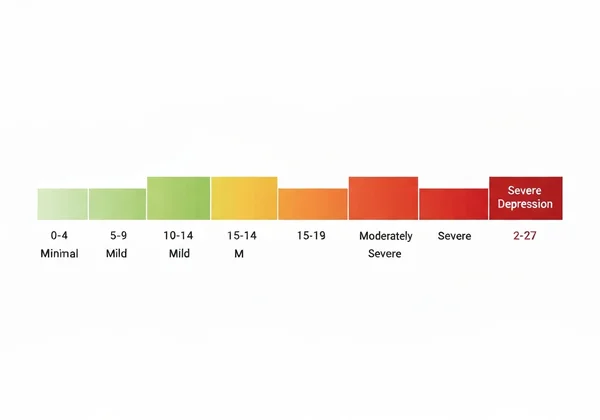
Clinicians generally use the following score ranges to understand the severity of depressive symptoms. Here’s a simple breakdown of what each level might indicate:
-
0-4: Minimal or No Depression. Your score suggests you're experiencing few, if any, symptoms of depression. This is a great baseline for maintaining your emotional wellness.
-
5-9: Mild Depression. You may be dealing with persistent but manageable symptoms like low mood, loss of interest, or changes in sleep. These symptoms are noticeable but may not be severely impacting your daily life.
-
10-14: Moderate Depression. Symptoms are more frequent and are likely interfering with your work, social life, or home responsibilities. At this stage, professional support is often recommended.
-
15-19: Moderately Severe Depression. You're likely experiencing significant and persistent symptoms that make daily functioning very difficult. Seeking professional help is strongly advised.
-
20-27: Severe Depression. Symptoms are intense, pervasive, and severely impact your ability to function. It's critical to seek professional medical and psychological support immediately.
Why Your PHQ-9 Score is a Starting Point, Not a Diagnosis
This is the most important takeaway: the PHQ-9 is a screening tool, not a diagnostic test. A high score doesn't automatically mean you have clinical depression, and a low score doesn't dismiss the feelings you're experiencing.
Think of it like a smoke alarm. It alerts you to smoke but can't tell you if it's from burnt toast or a serious fire. Similarly, your PHQ-9 score alerts you to potential emotional distress. Only a qualified healthcare professional can conduct a comprehensive evaluation and create a personalized treatment plan. Use your score as a starting point for conversations about your mental health.
Mild Depression: Self-Management & Lifestyle Support (PHQ-9 Scores 0-9)
If your score falls in the 0-9 range, it may indicate minimal to mild symptoms. For many, this is an opportunity to focus on building resilience and practicing proactive self-care. These strategies can help manage symptoms and promote overall emotional health.
Empowering Self-Care: Evidence-Based Lifestyle Changes
Simple, consistent habits can make a huge difference in how you feel. They aren't "cures," but they are supportive actions shown to improve mood and well-being.
-
Consistent Physical Activity: Aim for 30 minutes of moderate exercise, like brisk walking, most days of the week. Exercise releases endorphins, which have mood-boosting effects.
-
Balanced Nutrition: A diet rich in fruits, vegetables, lean proteins, and whole grains can support brain health. Try to limit processed foods, sugar, and excessive caffeine.
-
Prioritize Sleep: Aim for 7-9 hours of quality sleep per night. Create a relaxing bedtime routine and keep your sleep schedule consistent, even on weekends.
-
Practice Mindfulness: Techniques like meditation, deep breathing exercises, or yoga can help reduce stress and ground you in the present moment.
-
Maintain Social Connections: Make time for friends, family, or community groups. Meaningful social interaction is a powerful buffer against feelings of isolation.

When Self-Help Isn't Enough: Recognizing the Need for More Support
Self-care is powerful, but it's important to recognize when it’s not enough. Even with a mild score, you should consider speaking with a professional if:
- Your symptoms persist for several weeks or get worse.
- You feel overwhelmed and self-care feels like another chore.
- Your symptoms are still negatively affecting your relationships or performance at work or school.
Trust your feelings. If you believe you need more support, seeking it is a sign of strength. Periodically using a tool to check your score can help you track your emotional state over time.
Moderate to Severe Depression: When to Seek Professional Help (PHQ-9 Scores 10-27)
A score of 10 or higher suggests that depressive symptoms are likely causing real distress and impacting your daily life. At this level, self-management alone often isn't enough, and seeking professional help is a vital and effective step toward recovery.
Understanding Professional Help: Therapy, Medication, and Integrated Approaches
Professional treatment isn't one-size-fits-all. Your healthcare provider can help you find the right approach for your unique needs. Common evidence-based treatments include:
- Psychotherapy (Talk Therapy): Working with a licensed therapist can help you understand your thoughts and behaviors, develop coping skills, and process difficult emotions. Cognitive Behavioral Therapy (CBT) is one highly effective form.
- Medication: A medical doctor or psychiatrist may prescribe antidepressant medication. These medications can help correct chemical imbalances in the brain associated with depression.
- Integrated Care: For many people, the most effective approach is a combination of therapy and medication, along with healthy lifestyle changes.
PHQ-9 Scores 20-27: Crisis Support and Immediate Action
If your score is in the severe range (20+), or if you're having thoughts of harming yourself (as asked in Question 9), it's essential to seek help immediately. Your safety is the number one priority.
If you are in crisis, please act now:
- Contact a crisis hotline like the 988 Suicide & Crisis Lifeline by calling or texting 988 in the US and Canada. In the UK, you can call 111.
- Go to the nearest emergency room.
- Reach out to a trusted friend, family member, or healthcare professional.
A high score is a clear signal that you need immediate, compassionate support. Please don't wait.
Preparing for Your Consultation: Using Your PHQ-9 Results Effectively
Your PHQ-9 score is an excellent tool for starting a productive conversation with a healthcare provider. It provides objective data to help you explain what you've been experiencing.
How to Discuss Your PHQ-9 Score with a Healthcare Provider
To make the most of your appointment, it helps to be prepared. Here are a few tips:
- Bring Your Results: Print out or have your PHQ-9 score and answers ready to show your provider.
- Be Specific: Talk about how your symptoms affect your life. For example, instead of just saying "I have trouble sleeping," you could say, "I have a hard time falling asleep most nights and wake up feeling exhausted."
- Talk About Your Goals: What do you hope to achieve? Do you want to have more energy, enjoy your hobbies again, or feel less irritable?
- Be Honest: Your provider is there to help, not to judge. Be open about your feelings, including any concerns you have about treatment.
Navigating Your Treatment Journey: Questions to Ask and What to Expect
Feeling empowered in your treatment is key. Don't be afraid to ask questions to ensure you understand and are comfortable with the proposed plan.
- What are my treatment options, and what are the pros and cons of each?
- If you are recommending medication, what are the potential side effects?
- How will we measure progress? Should I take the test again to track my score?
- What lifestyle changes do you recommend to support my treatment?
Working together with your healthcare team creates a collaborative path to better well-being.

Moving Forward: Using Your PHQ-9 Results to Guide Your Mental Health Journey
Looking ahead, your PHQ-9 score is more than just a number—it's a valuable insight into your emotional well-being. It’s a tool that can help you understand where you're at, communicate your needs effectively, and take the right next steps on your path to feeling better.
As you move forward, keep these key takeaways in mind:
- The PHQ-9 is a highly reliable screening tool, but not a diagnosis.
- Different score ranges point toward different levels of support, from proactive self-care to essential professional help.
- Seeking help is a sign of strength, and effective treatments are available.
You've already taken a courageous first step by seeking information. Now, you can use that knowledge to advocate for your health and well-being.
Ready to gain your own insight? Start your PHQ-9 assessment today to get a free, confidential snapshot of your emotional health.
Frequently Asked Questions About PHQ-9 Scores & Treatment
Can the PHQ-9 test diagnose depression?
No, the PHQ-9 is a clinical screening tool used to identify and measure the severity of depressive symptoms. It's an excellent starting point, but a formal diagnosis of depression can only be made by a qualified healthcare professional after a comprehensive evaluation.
What is considered a "positive" PHQ-9 score?
While any score above 0 indicates the presence of some symptoms, a score of 10 or higher is often used in clinical settings as a cut-off point, suggesting that a person's symptoms are significant enough to warrant further assessment for a depressive disorder.
How often should I take the PHQ-9?
The frequency depends on your situation. You might take it once for an initial baseline, or a healthcare provider may ask you to take it every 2-4 weeks to monitor your progress during treatment. Taking the test when you notice a significant change in your mood can also be helpful. It’s always a good idea to check in regularly with yourself.
Is the PHQ-9 a reliable assessment tool?
Yes, the PHQ-9 is one of the most widely used and validated tools for screening for depression. It's been extensively studied and is considered highly reliable for detecting depressive symptoms and measuring their severity across diverse populations.
Who can interpret my PHQ-9 results professionally?
While our platform provides a general interpretation, a professional interpretation should be done by a qualified healthcare provider. This includes primary care physicians, psychiatrists, psychologists, licensed therapists, clinical social workers, or psychiatric nurses. They can place your score in the context of your overall health and life circumstances.