PHQ9 AI Analysis: Clinical Standards & Accuracy of Our Depression Assessment Tool
Artificial Intelligence (AI) is transforming many parts of our lives, but when it comes to mental health, a healthy dose of skepticism is understandable. Can an AI truly offer meaningful insights into something as personal as your emotional well-being? At phq-9.org, we believe the answer is yes—when it's built on a foundation of science, transparency, and a commitment to user trust.
We want to show you exactly how our AI analysis works. We'll explore the science behind it, how we ensure its accuracy aligns with clinical standards, and its proper role in your mental health journey. Our goal is to empower you with a clear understanding so you can confidently take the next step. If you're ready to see how it works, you can always start your assessment for free.
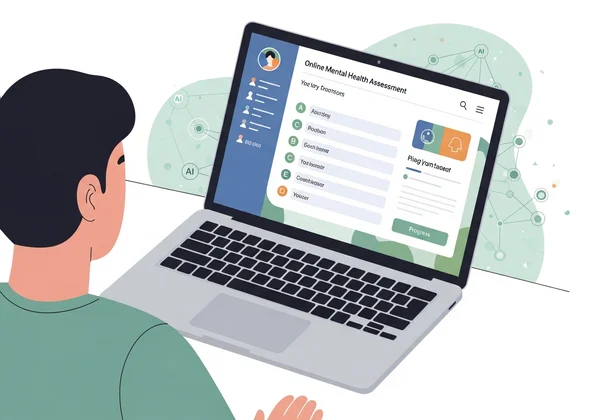
The Science Behind PHQ-9.org's AI Analysis Methodology
Our optional AI report goes beyond a simple PHQ-9 score. It provides personalized insights into your emotional state. But how does it arrive at these conclusions? The process is a blend of established psychological science and carefully trained machine learning models. We designed it to be a bridge, translating your answers into a clearer, more actionable picture of your current challenges and strengths.
The Science Behind Our AI Analysis
The core of our AI is not guesswork; it’s data science grounded in psychological principles. The process starts with your answers to the standard nine PHQ-9 questions. To generate the optional personalized report, the AI also considers your anonymous responses to a few additional background questions.
Our system uses a sophisticated algorithm trained on a vast, anonymized dataset. This dataset includes patterns reviewed by mental health professionals. The AI then identifies subtle connections between different symptoms, their severity, and how they might impact daily life. It analyzes patterns that a simple numerical score might miss, such as:
- Symptom Clusters: Identifying if your symptoms point more toward issues with mood, energy, or self-perception.
- Contextual Impact: Understanding how factors you provide, like recent life events or sleep patterns, might be interacting with your symptoms.
- Personal Strengths: Highlighting areas where you are showing resilience, which is a crucial part of any mental wellness plan.
The result is not a diagnosis but a structured, insightful narrative that reflects your unique situation back to you in an easy-to-understand format.
How Our AI Compares to Clinical Interpretation
A common question is whether our AI can replicate the nuance of a human clinician. It's important to be clear: our AI is not a replacement for a doctor or therapist. Instead, it’s designed to function like a highly efficient assistant, performing an initial analysis that mirrors the structured thinking a professional might use.
When a clinician reviews a PHQ-9, they look at the total score, but they also consider which specific questions were scored highest. They ask follow-up questions to understand the context. Our AI simulates this process by analyzing your answers against established clinical patterns.
For example, a high score on questions related to sleep and appetite might prompt a different set of insights than high scores on questions about self-worth and concentration. Our AI report organizes these insights into categories like "Key Challenges" and "Potential Influences," giving you a preliminary framework that you can then discuss with a healthcare provider. It provides a starting point for a more productive conversation.
Clinical Validation of Our PHQ9 AI Depression Report
Trust is everything in mental health. That's why we've invested heavily in validating the PHQ-9 AI analysis to ensure it is not only innovative but also reliable and responsible. Our validation process is rigorous and ongoing, combining quantitative testing with qualitative review from experts in the field.
Accuracy Benchmarks and Testing Results
To measure the AI depression analysis accuracy, we benchmark our system against established clinical interpretation standards. We conducted extensive testing where anonymized PHQ-9 results were analyzed by both our AI and a panel of qualified mental health professionals.
The goal was to measure alignment between our AI's identified themes and human expert conclusions. For example, we compared how often both flagged "challenges with motivation" or "impact on social activities" as key concerns. Our internal testing shows a high degree of correlation. The AI consistently identifies the same primary and secondary areas of concern that our expert panel flagged. This ensures that the personalized report you receive is not random but reflects recognized patterns of emotional distress.
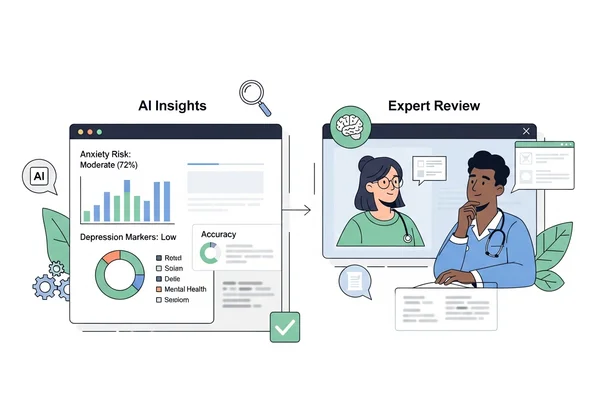
Expert Review and Clinical Validation Process
Technology alone is not enough. The clinical validation of our mental health tech is a cornerstone of our development process. Our AI models and the reports they generate are regularly reviewed by an advisory board of psychologists and clinical social workers.
This expert review process serves several key functions:
- Ensuring Clinical Relevance: Experts confirm that the insights provided are helpful and align with current understandings of mental health.
- Refining Language: They help us refine the language in the reports to be empathetic, empowering, and free of jargon or alarming terminology.
- Guarding Against Bias: The panel helps us identify and mitigate potential biases in the algorithm to ensure the analysis is as fair and objective as possible for our diverse global user base.
This human oversight ensures our assessment platform remains a tool that is not just technologically advanced, but also clinically responsible and genuinely helpful.
Responsible Use: PHQ9 AI Analysis Limitations
While we are proud of our AI analysis, transparency about its limitations is critical for its responsible use. Understanding what the tool can and cannot do is key to getting the most value from it. It's a powerful resource for self-reflection, but it is just one step on a larger journey toward wellness.
When to Seek Professional Evaluation
It cannot be stated enough: the PHQ-9 test and our AI-driven report are screening tools, not diagnostic tools. They can help you identify and understand potential symptoms of depression, but they cannot tell you with certainty if you have a clinical disorder.
You should always consult a qualified healthcare professional, such as a doctor, psychiatrist, or therapist, for a formal diagnosis and treatment plan. Consider our tool as a way to gather information and gain clarity before that conversation. If your results from the free online PHQ-9 assessment cause you concern, that is a clear sign that it’s time to seek professional guidance. This is especially true if you score highly on question nine, which addresses thoughts of self-harm.
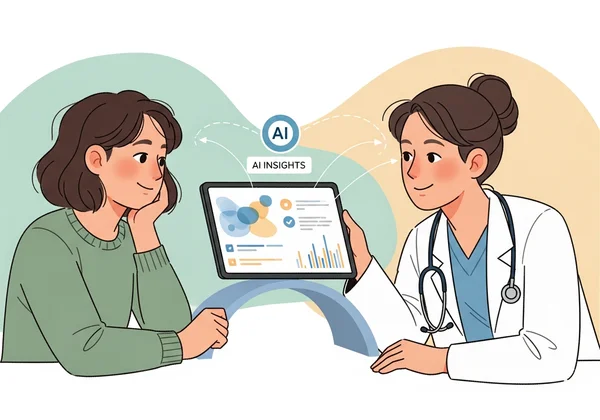
Understanding AI's Role in Mental Health Assessment
So, what is the proper role for AI in mental health? Think of it as a guide, not a judge. Its purpose is to:
- Increase Accessibility: Provide immediate, private, and free insights to anyone, anywhere, in over 15 languages.
- Reduce Stigma: Offer a low-pressure way to explore your feelings without having to speak to someone first.
- Empower Action: Give you a structured summary of your situation, including personal strengths and actionable steps, that can make the idea of seeking help feel less daunting.
The AI organizes the "what" (your symptoms) so you can focus on the "what's next" with a clearer perspective. It’s a first step, designed to make the path forward easier to navigate.
Real User Experiences with the PHQ-9 AI Analysis
We're most proud of how real users have found value in our AI analysis. The feedback we've received from users around the world has been instrumental in shaping our AI analysis into what it is today. Their experiences highlight how data-driven insights can lead to profound personal understanding.
Beta Test User Feedback and Success Stories
During our beta testing phase, we collected anonymous feedback that helped us refine our AI report. Many users expressed that the personalized analysis felt more helpful than a simple score.
One user, "Alex," shared that seeing their challenges laid out as "difficulty with concentration" rather than just a number made their struggles feel more concrete and less overwhelming. They used the report as a conversation starter with their doctor, feeling more prepared and confident in that discussion. Another user noted that the "Personal Strengths" section was surprisingly motivating, reminding them that even during a difficult time, they still had resilience to draw upon. These stories validate our mission to provide not just data, but hope and direction.
Addressing Common Concerns from Our Community
We also listen closely to your concerns. A common question is about data privacy. We want to be absolutely clear: your privacy is paramount. The assessment is anonymous, and we do not require you to create an account. The optional data used for the AI analysis is processed securely and is never linked to your personal identity.
Another concern is the fear of receiving an alarming result. Our reports are carefully worded to be supportive and non-judgmental. The goal is never to scare you, but to inform you. Every report concludes by emphasizing the importance of professional consultation, reinforcing that the results are a starting point for a conversation, not a final verdict. If you have questions, our platform is designed to provide answers and guide you toward reliable support.
Your Next Steps in Understanding AI-Enhanced Mental Health Assessment
You've seen how our AI analysis combines scientific rigor with clinical validation. It is a tool built on a foundation of clinical expertise and technological innovation, designed to offer you a clearer, more personalized understanding of your emotional well-being. It translates your answers into meaningful insights, empowering you with knowledge and confidence.
Above all, remember that you're not on this journey alone, and understanding is the first step toward feeling better. Our AI report offers a private, accessible way to gain that understanding. It gives you a structured summary of your strengths and challenges, providing a solid foundation for your next steps, whether that's self-care or a conversation with a professional.
Are you ready to gain a deeper insight into your emotional health? The journey begins with a single step.
Take your free PHQ-9 test today and discover what our personalized AI analysis can reveal for you.**
FAQ Section
How accurate is the PHQ-9 AI depression analysis?
Our AI analysis demonstrates a high degree of correlation with interpretations made by mental health professionals in our internal testing. It accurately identifies key themes and symptom clusters based on your anonymous answers. However, it is a screening tool for informational purposes and not a substitute for professional diagnosis.
Can the AI analysis replace a professional diagnosis?
No, absolutely not. The AI analysis and the PHQ-9 score are designed to be informative screening tools. They can help you understand your symptoms and prepare for a conversation with a healthcare provider, but only a qualified doctor or mental health professional can provide a diagnosis.
What data does the AI use for analysis?
The AI uses your anonymous answers to the nine standard PHQ-9 questions. To generate the optional personalized report, it also considers your answers to a few additional, non-identifiable background questions you may choose to provide. All data is processed securely and privately.
How does the AI ensure privacy and confidentiality?
We are committed to your privacy. The entire process on phq-9.org is anonymous. We do not require registration, names, or email addresses. The data used for the AI analysis is not linked to any personal identifiers, ensuring your screening remains confidential. If you'd like to begin, you can try our free tool with peace of mind.
Is the AI analysis available in multiple languages?
Yes. Just like our standard PHQ-9 test, the platform is designed to be globally accessible. The AI analysis is integrated into our multilingual system, offering personalized insights in over 15 languages, including Spanish, French, German, and many more, to support users worldwide.