Screening for Depression - Tools, Scores, and Follow-Up Plans
Screening for depression is a structured way to notice when low mood, loss of interest, sleep changes, fatigue, concentration trouble, or self-critical thoughts may deserve closer attention. It is not a medical conclusion by itself. A screening result is best understood as a signal: something to reflect on, track over time, and discuss with a qualified professional when needed. If you want a simple place to understand the PHQ-9 format, the PHQ-9 self-check resource can help you explore common depression screening questions in a calm, educational way.

What Screening for Depression Means
A depression screen uses standard questions to check whether recent experiences may line up with common depressive symptoms. Most tools ask about a defined time window, often the past two weeks, and ask how often symptoms have been present. This matters because a passing sad day, a period of grief, chronic illness, medication effects, sleep loss, and stress can all affect mood in different ways.
Good screening does three things. First, it gives language to experiences that can feel vague or hard to explain. Second, it creates a repeatable score or pattern that can be compared later. Third, it encourages follow-up when a result suggests meaningful distress, impaired daily life, or possible safety concerns.
The limitation is just as important. A questionnaire cannot know your full story. It does not account for all medical conditions, life events, substance use, cultural context, or personal history. That is why screening for depression works best as a doorway into care, reflection, and conversation, not as the final answer.
Common Screening Tools for Depression and Anxiety
Several screening tools appear in primary care, counseling, workplace wellness, schools, and online education. They are related, but they are not interchangeable.
| Tool | What it focuses on | Typical role |
|---|---|---|
| PHQ-2 | Two core depression questions | Very brief first pass |
| PHQ-9 | Nine depression symptom areas | Depression screening and severity tracking |
| GAD-7 | Seven anxiety symptom areas | Anxiety screening and severity tracking |
| EPDS | Perinatal mood symptoms | Pregnancy and postpartum screening |
| GDS | Older adult mood symptoms | Screening in older adult care |
The two screening questions often refer to the PHQ-2. They ask about reduced interest or pleasure and feeling down, depressed, or hopeless. If those answers suggest concern, a longer screening questionnaire for depression, such as the PHQ-9, may be used to look at sleep, energy, appetite, concentration, movement changes, self-worth, and thoughts of self-harm.
The PHQ-9 and GAD-7 are often mentioned together because depression and anxiety can overlap. The PHQ-9 focuses on depressive symptoms. The GAD-7 focuses on anxiety symptoms such as worry, restlessness, irritability, and trouble relaxing. Someone can have a high score on one, both, or neither, so a combined depression and anxiety screening can be useful when symptoms are mixed.
How the PHQ-9 Screening Instrument Works
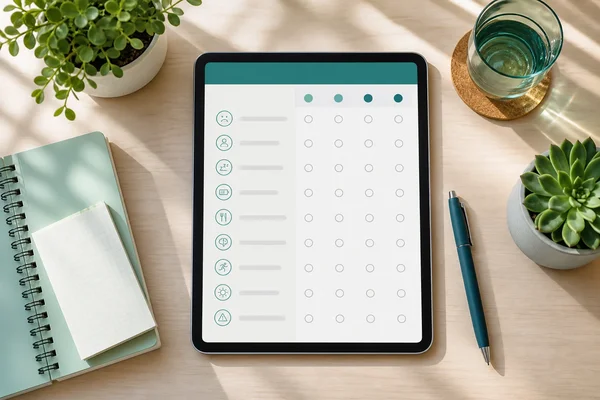
The PHQ-9 screening instrument for depression asks about nine symptom areas over the past two weeks. Each item is usually rated from 0 to 3, based on how often the symptom has occurred. The total score ranges from 0 to 27.
Many educational and clinical references group PHQ-9 scores this way:
| PHQ-9 score | General severity range |
|---|---|
| 0-4 | Minimal or none |
| 5-9 | Mild |
| 10-14 | Moderate |
| 15-19 | Moderately severe |
| 20-27 | Severe |
These ranges are helpful, but they should not be read in isolation. A score of 8 may still matter if symptoms are new, worsening, or affecting work, school, parenting, relationships, or daily routines. A score of 14 may need a different response depending on safety, history, supports, and medical context. Any answer suggesting self-harm deserves prompt human support, even if the total score is not the highest range.
For a private, browser-based way to review the format, you can use an online PHQ-9 scoring guide as an educational starting point. Bring any concerning result to a clinician, therapist, school counselor, or another qualified support person who can consider the broader picture.
Screening in Adults, Older Adults, Children, and Primary Care
Screening for depression in adults is commonly discussed in primary care because mood symptoms often appear alongside sleep problems, pain, chronic conditions, fatigue, pregnancy, postpartum changes, or major life stress. A short tool can make it easier to raise the topic during a routine visit.
Screening for depression in older adults may require extra care because symptoms can overlap with grief, isolation, medication effects, cognitive changes, or physical illness. Older adults may also describe depression through low energy, sleep change, body aches, or withdrawal rather than saying they feel sad.
Screening for depression in children is usually more precise when described as screening for adolescents or age-appropriate pediatric screening. Teenagers may show irritability, school changes, social withdrawal, risk-taking, or sleep shifts. A teen depression screening should be paired with family context, privacy-sensitive conversation, and professional judgment.
Pregnancy and postpartum screening often uses tools designed for that life stage because anxiety, bonding concerns, sleep disruption, and intrusive thoughts may appear alongside depressive symptoms. Screening for postpartum depression should be supportive, not shaming, and should make room for practical support as well as clinical care.
In primary care, screening is strongest when the office has a plan for next steps. A questionnaire without follow-up can leave a person with a score but no path. A better workflow explains what the result means, checks safety when needed, and offers options for further evaluation, therapy, medication discussion, community support, or monitoring.

What a Follow-Up Plan Can Include
Searches for screening for depression and follow-up plan often come from people trying to understand what should happen after a positive screen. In clinical quality measures, a follow-up plan generally means that a positive result is connected to a documented next step. For an individual reader, the practical idea is simple: do not stop at the score.
A follow-up plan may include:
- A conversation with a primary care clinician, therapist, psychiatrist, school counselor, or other qualified professional.
- Further evaluation of symptoms, safety, medical conditions, medications, substance use, sleep, and stress.
- Referral to counseling, therapy, psychiatry, group support, or community services.
- Discussion of treatment options when appropriate.
- A plan to repeat screening later to track changes.
- A safety plan or urgent support if self-harm thoughts are present.
If a PHQ-9 response includes thoughts of self-harm, treat that as important information. Reach out to local emergency services, a crisis line, or a trusted person right away if there is any risk of acting on those thoughts. You do not need to wait for a score to become severe before asking for help.

ICD-10 and CPT Code Searches Are Billing Questions
Search phrases such as screening for depression ICD-10, ICD-10 code for screening for depression, CPT code for depression screening, or CPT for depression screening point to administrative questions, not personal health answers. Code choice can depend on the country, payer, visit type, clinician documentation, age group, quality-measure requirements, and whether screening was preventive, part of a broader visit, or connected to follow-up care.
If you are a patient, the most useful question is usually not "which code applies?" but "what does my result mean, and what happens next?" If you are a clinician, biller, or practice manager, use current payer rules and official coding guidance rather than a general article. Depression screening in primary care is both a care process and a documentation process, and those two sides should support each other without confusing the person being screened.
How to Use Depression Screening Results With Care
The most helpful way to use screening for depression is to combine structure with kindness. Write down the date, the tool used, the score, the symptoms that felt most important, and any life events that may have affected your answers. If you repeat the same screening tool later, compare patterns rather than judging one number in isolation.
Before talking with a professional, you might note:
- Which symptoms are affecting your daily routine most.
- How long the changes have been present.
- Whether symptoms are improving, worsening, or moving up and down.
- Whether anxiety, grief, chronic illness, pain, sleep, or substance use may be part of the picture.
- What kind of support feels realistic right now.
If you want a gentle starting point, revisit the PHQ-9 educational screening tool and use the result as one piece of information. The goal is not to label yourself. The goal is to understand what you are experiencing, decide whether support would help, and make the next conversation easier.
FAQ
What is the screening test for depression?
A common screening test for depression is the PHQ-9, a nine-question tool that asks how often depressive symptoms have been present over the past two weeks. The PHQ-2 is a shorter first-pass option, while other tools may be used for postpartum, older adult, pediatric, or research settings.
What's the difference between PHQ-9 and GAD-7?
The PHQ-9 screens for depressive symptoms and gives a score from 0 to 27. The GAD-7 screens for anxiety symptoms and gives a score from 0 to 21. They use similar response styles, but they focus on different symptom patterns.
What tests are done to check for depression?
Professionals may use screening questionnaires such as the PHQ-2, PHQ-9, EPDS, GDS, or other age-appropriate tools. They may also ask about medical history, sleep, medication, substance use, stress, safety, and daily functioning.
What are the two screening questions for depression?
The two PHQ-2 questions ask about reduced interest or pleasure and feeling down, depressed, or hopeless during the past two weeks. A concerning response often leads to a longer questionnaire or a more detailed conversation.
Is screening for depression in primary care enough?
Screening in primary care is a useful first step, especially when it is paired with follow-up. It is usually not enough by itself when symptoms are intense, persistent, unsafe, or affecting daily life.
What should I do if my score is high?
Consider sharing the result with a qualified professional who can look at symptoms, context, safety, and support options. If you have thoughts of self-harm or feel at risk, contact emergency services, a crisis line, or a trusted person right away.