The Complete Guide to Depression Questionnaires: Understanding the PHQ-9
It is often incredibly difficult to capture exactly how you feel when the weight of depression settles in. You might feel a lingering sadness, a sudden loss of energy, or an inability to focus on daily tasks, yet struggle to explain these changes to a doctor or even to yourself. This is exactly where a depression questionnaire becomes an invaluable tool. Rather than asking you to perfectly articulate your emotional pain, these structured assessments give you a clear, proven framework to organize your thoughts and measure your symptoms objectively.
Whether you are seeking clarity for yourself or preparing for an upcoming doctor's appointment, understanding how these screening tools work is the first step toward taking control of your emotional well-being. This guide will break down the globally recognized PHQ-9 assessment, explain what your scores mean, and help you take the next, actionable step toward feeling better.
Why do doctors use a depression questionnaire?
When you visit a healthcare professional for a physical ailment, like a broken bone or a fever, they have clear tools—like X-rays and thermometers—to make a diagnosis. Mental and emotional health, however, is subjective. Doctors cannot draw blood or take an X-ray to see how heavily depression is weighing on your mind.
A depression questionnaire bridges this gap. It provides a standardized method for clinicians and patients to communicate. By asking specific, research-backed questions about your sleep, appetite, energy, and mood over a set timeframe (usually the past two weeks), doctors can calculate a baseline severity of your symptoms. This measurement helps them track whether a treatment is working over time or if adjustments need to be made. More importantly, it validates your experience, giving a name and a number to the heavy feelings you have been carrying.
What is the Patient Health Questionnaire (PHQ-9)?
While there are many assessment tools available, the Patient Health Questionnaire (PHQ-9) is widely considered the gold standard for depression screening in primary care settings worldwide. The "9" refers to the nine specific criteria for major depressive disorder outlined in the DSM-5 (the official diagnostic manual used by mental health professionals).
The PHQ-9 is esteemed because it is incredibly efficient—taking just a few minutes to complete—yet highly accurate. It asks you to rate how often you have been bothered by specific problems over the last 14 days, ranging from "Not at all" to "Nearly every day."
What are the 9 questions for depression on the PHQ-9?
The PHQ-9 covers a broad spectrum of emotional and physical symptoms. The 9 questions for depression focus on:
- Having little interest or pleasure in doing things you usually enjoy.
- Feeling down, depressed, or entirely hopeless.
- Experiencing trouble falling or staying asleep, or sleeping entirely too much.
- Feeling tired or having virtually no energy.
- Noticing significant changes in appetite (poor appetite or overeating).
- Feeling bad about yourself, or feeling that you are a failure who has let your family down.
- Having trouble concentrating on simple tasks, such as reading the newspaper or watching television.
- Moving or speaking so slowly that others have noticed, or conversely, being incredibly restless and fidgety.
- Having thoughts that you would be better off dead, or thoughts of hurting yourself in some way.
Understanding Your Results: How Are Questionnaires Scored?
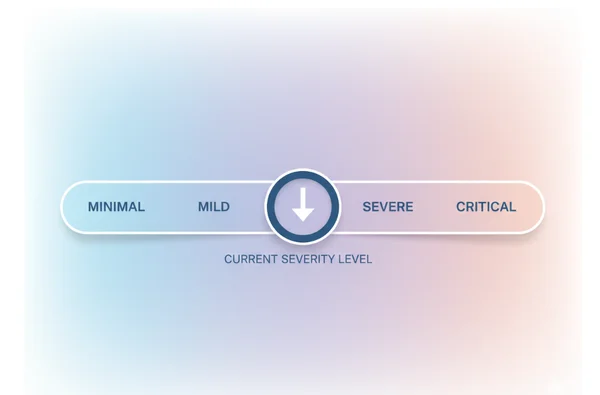
The beauty of the PHQ-9 is its simplicity in scoring. Each of the 9 questions is given a point value based on your answer:
- Not at all = 0
- Several days = 1
- More than half the days = 2
- Nearly every day = 3
By adding the numbers together, you get a total score ranging from 0 to 27. Modern platforms offering a depression questionnaire online calculate this for you instantly. The total score acts as a thermometer for your mood, falling into specific severity ranges:
- 0-4: Minimal or no depression
- 5-9: Mild depression
- 10-14: Moderate depression
- 15-19: Moderately severe depression
- 20-27: Severe depression
What does a PHQ-9 score of 15 mean?
If you receive a PHQ-9 score of 15, it falls directly into the "moderately severe depression" category. This indicates that your symptoms are significantly interfering with your daily life, relationships, or work. A score in this range is typically a strong signal that you should schedule an appointment with a healthcare provider or a mental health professional to discuss treatment options, which may involve therapy, lifestyle changes, or medication.
Curious about your own score? Take a fast, confidential test to get your results instantly. Start Your Free PHQ-9 Assessment
Other Common Tests: BDI and Specialized Questionnaires
While the PHQ-9 is the most common tool used in general medical settings, you might hear about others depending on your specific situation or the specialist you visit.
The Beck Depression Inventory questionnaire (BDI) is another highly respected tool. Unlike the PHQ-9, which strictly aligns with DSM-5 diagnostic criteria, the BDI focuses more heavily on the psychological and cognitive symptoms of depression, such as feelings of worthlessness and guilt. The BDI contains 21 questions, making it slightly longer to complete.
Is there a specific postpartum or bipolar depression questionnaire?
Yes. Depression is not a one-size-fits-all condition. For new mothers experiencing intense emotional shifts after childbirth, doctors often use the Edinburgh Postnatal Depression Scale (EPDS) rather than a general test.
Similarly, if a doctor suspects bipolar disorder, a standard depression test is not enough. They will often employ a tool like the Mood Disorder Questionnaire (MDQ) specifically designed to screen for the manic or hypomanic episodes associated with bipolar disorder, ensuring the correct treatment path is chosen. However, the PHQ-9 remains the best starting point for analyzing baseline depressive symptoms before diving into specialized tests.
The Reality of Online Tests: Can They Replace a Doctor?
With the rise of digital health resources, finding a patient health questionnaire phq 9 for depression online is easier than ever. These tools are fantastic for personal insight. Taking a test in the privacy of your own home can break down the stigma and fear associated with mental healthcare.
However, a strict boundary must be drawn: no online questionnaire can replace a clinical diagnosis. An online test cannot factor in your complete medical history, potential thyroid issues, vitamin deficiencies, or recent life events. A high score on a web-based test is a validation of your suffering and a signpost pointing you toward a doctor, but only a qualified healthcare professional can officially diagnose and treat clinical depression.
Next Steps: Taking Action for Your Emotional Health
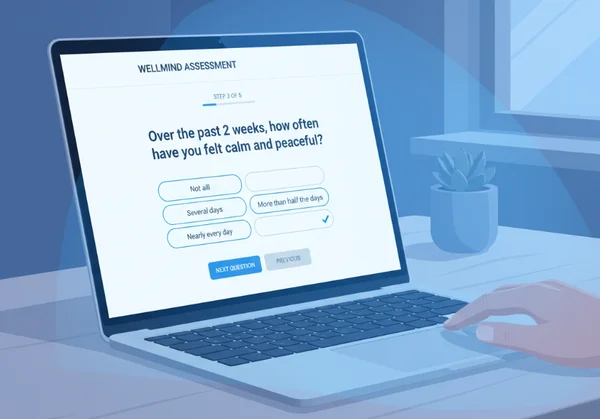
Understanding what these screening tools are and how they work can significantly reduce the anxiety of reaching out for help. If you have been struggling with a heavy mood, lack of focus, or exhaustion, you do not have to wait for a doctor's appointment to begin exploring your feelings.
Taking a structured, scientifically validated assessment can give you the vocabulary you need to advocate for yourself in a clinical setting. Beyond a simple number, modern platforms can even provide AI-driven personalized insights, highlighting your unique challenges and actionable coping strategies based on your specific answers.
Ready to check in on your emotional health using a standardized depression questionnaire? Try our free tool and optionally receive a deep-dive AI analysis of your results to map out your next steps. Take the PHQ-9 Test Now
Frequently Asked Questions
How can you test yourself safely online?
To test yourself safely, ensure you are using a validated tool like the official PHQ-9. Look for platforms that prioritize your privacy and do not require you to input identifying personal information to get your basic results. Answer the questions as honestly as possible based solely on the last 14 days. Finally, always view your online score as a stepping stone to professional medical advice, not a final medical conclusion.
Disclaimer: This article is for educational purposes only and does not constitute medical advice or a clinical diagnosis. Always consult a qualified mental health professional for evaluations and treatment plans concerning depression or any other mental health condition.