Understanding Depression Surveys: How to Track Your Mood
If you have recently noticed a persistent dip in your energy, unexpected changes in your sleep, or a fading interest in activities you once loved, you might be wondering how to make sense of these shifts. Navigating changes in your mental health can feel confusing, but learning how to monitor your emotional state offers a structured path forward. A depression survey provides a reliable, clinically backed framework to look beneath the surface of daily stress and evaluate your symptoms objectively. This guide will walk you through how modern screening tools evaluate emotional health, what individual questionnaire score ranges signify, and how you can establish an empowering routine to track your mood and clarify your thoughts. Therefore, you can safely explore a trusted depression survey online to begin building your personal wellness baseline today.

What Is a Depression Survey and How Does It Work?
A depression survey operates as a structured instrument designed to highlight specific behavioral, cognitive, and physical patterns. When you experience prolonged sadness or fatigue, your mind often struggles to look at your situation objectively. These surveys use a series of standardized, research-backed questions to help you gather clear insights into your current state. Usually, they focus on a specific time frame, such as the past two weeks, to measure the consistency of your feelings.
The Vital Difference Between Screening and Medical Diagnosis
It is essential to understand that a screening tool is not the same as a medical diagnosis. A depression survey serves as a preliminary check-in to identify potential signs of emotional distress. For example, a screener can highlight that your low energy has persisted for weeks, but it cannot pinpoint underlying biological causes or confirm a specific clinical condition. Only a qualified healthcare professional can provide a definitive psychiatric evaluation. Meanwhile, a self-assessment acts as an exceptional starting point to help you organize your thoughts before seeking expert guidance.
Understanding the Limits: What an Online Screener Cannot Tell You
While an online depression screening tool offers incredible privacy and convenience, it possesses inherent limitations. For instance, a survey measures the severity of your symptoms but cannot identify why you feel that way. Temporary situational factors, such as acute grief, extreme work burnout, severe financial stress, or poor sleep hygiene, can easily elevate your scores. Because these questionnaires rely entirely on self-reported data, they reflect a temporary snapshot of your feelings rather than a complete, permanent medical profile.
Gold Standard Screenings: What Is the Best Questionnaire for Depression?
In the field of mental health, clinicians utilize several validated tools to measure emotional well-being. If you are exploring options, you might wonder which depression survey holds the highest empirical value. Different questionnaires focus on varying aspects of mood and behavior. However, certain frameworks have achieved global recognition due to their efficiency and accuracy.
The PHQ-9: Why Clinicians Default to the Patient Health Questionnaire
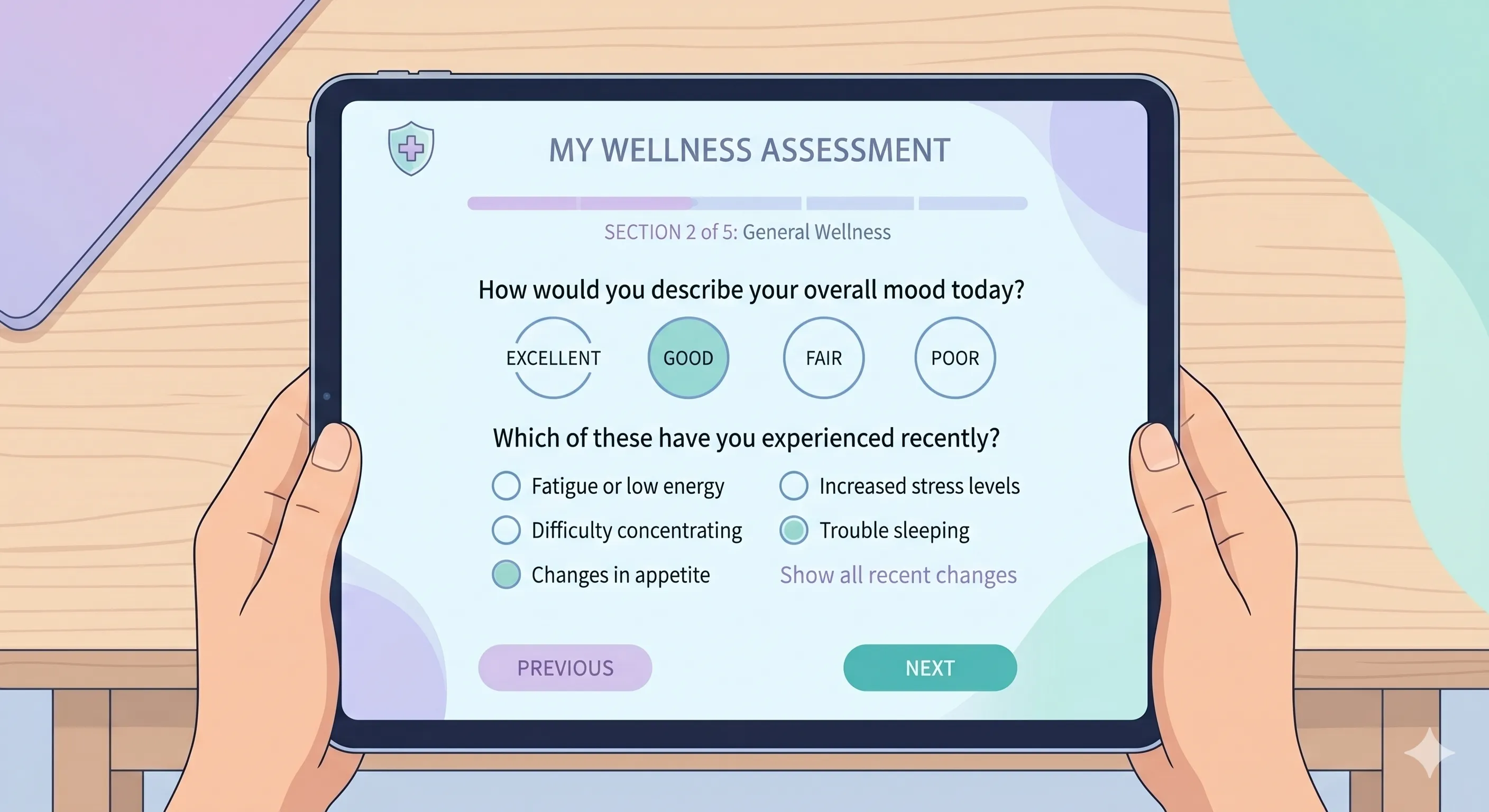
The Patient Health Questionnaire, specifically the 9-item version known as the PHQ-9, is widely considered the gold standard for depression screening. Each of its nine questions maps directly onto the diagnostic criteria for depressive disorders. Because it takes less than five minutes to complete, it balances clinical depth with extreme accessibility. If you want to utilize a comprehensive PHQ-9 guide to check your current traits, you can experience a streamlined, private assessment that mirrors the exact process used in modern medical clinics worldwide.
Alternative Measures: Evaluating the Beck Depression Inventory Framework
Another historically significant tool is the Beck Depression Inventory (BDI). While the PHQ-9 focuses heavily on both physical and emotional symptoms, the BDI places a stronger emphasis on cognitive distortions. For instance, it evaluates themes like hopelessness, severe self-criticism, and deep-seated guilt. Although highly thorough, the BDI is significantly longer and often requires a licensing fee, which makes the Patient Health Questionnaire more common for rapid, accessible digital tracking.
| Screening Tool | Primary Focus | Length | Typical Use Case |
|---|---|---|---|
| PHQ-9 | Diagnostic criteria & physical symptoms | 9 Questions | Rapid screening & routine mood tracking |
| BDI | Cognitive patterns & self-perception | 21 Questions | Deep psychological evaluation |
Decoding the Numbers: What Do Depression Survey Scores Mean?
Completing a depression survey yields a numerical score that translates your subjective experiences into objective data. Understanding these values helps you demystify your results and reduces the anxiety of the unknown. Most standardized tools use specific clinical severity tiers to categorize your answers.
Minimal to Mild Tiers: Navigating Burnout and Temporary Stress
Scores that fall within the minimal (0–4) or mild (5–9) brackets generally indicate that while emotional friction is present, your daily functionality remains largely intact. Often, a mild score reflects temporary periods of heavy stress, low energy, or situational burnout, such as dealing with a difficult project at work or navigating a hectic family schedule. If your results land here, it is usually a gentle reminder to evaluate your self-care habits, prioritize sleep, and incorporate basic stress-management exercises into your week.
Moderate to Severe Brackets: Recognizing Deep Fatigue and Anhedonia
When scores cross into the moderate (10–14), moderately severe (15–19), or severe (20+) ranges, the symptoms typically exert a noticeable impact on your daily life. You might find it incredibly difficult to concentrate at work, maintain social connections, or experience pleasure from your favorite hobbies—a state known as anhedonia. It is vital to remember that a high score is not a personal failure or a permanent label. Instead, it is an objective signal from your body indicating that it might be a supportive time to connect with a licensed professional.
Beyond the Numbers: How to Use Screenings to Track Your Mood
A single depression survey score tells you where you stand today, but the true power of screening emerges when you look at patterns over time. By transforming a static questionnaire into a routine mood tracking scale, you gain a dynamic view of your emotional health. This longitudinal approach prevents you from overreacting to a single bad day.
To build a meaningful emotional baseline, you can implement a simple, multi-step monitoring habit using the checklist below:
- Choose a consistent interval: Complete a standardized survey once every two weeks. Testing daily is unhelpful because normal mood fluctuations will create confusing data.
- Log environmental variables: Note major life events alongside your scores, such as high-stress work deadlines, menstrual cycles, or changes in sleep patterns.
- Focus on functionality: Track whether your scores align with your ability to complete daily tasks and enjoy hobbies.
- Review your baseline curve: Every two months, look at the trajectory of your scores. Are they steadily declining, plateauing, or spiking during specific seasons?
This structured process empowers you to spot emotional triggers before they feel completely overwhelming. Also, it gives you tangible data to look back on, showing you exactly how far you have come in your wellness journey.

Organizing Your Thoughts: Take a Private Self-Guided Check-In
When you are feeling emotionally exhausted, simply trying to explain your mood to yourself can feel like a monumental chore. This is precisely why structured self-reflection is your next logical step. Instead of letting vague thoughts swirl around your mind, a clear questionnaire helps you categorize your experiences into specific buckets like sleep, focus, and energy.
Why Structured Self-Reflection Is Your Next Logical Step
Writing down vague feelings often feels scattered and unhelpful. In contrast, answering structured prompts allows you to isolate physical issues from emotional ones. For example, you might realize your main struggle is not sadness, but severe fatigue and poor concentration. This distinction helps you understand what areas need immediate care and self-compassion.
Exploring the PHQ-9.org Tracker: Confidentiality and Clarity Combined
Our platform offers a safe, entirely confidential space where you can engage with a reliable PHQ-9 online test to begin compiling your personal baseline metrics. This screening tool requires no personal identifying information, ensuring your privacy is fully protected throughout your check-in. Taking this step allows you to organize your thoughts cleanly. Whether you choose to keep your results as a private benchmark or use them to seek external guidance, you are actively choosing clarity over confusion.
From Insight to Action: How Can Your Results Serve as a Bridge to Therapy?
Many people complete a depression survey but feel completely frozen when it comes to taking the next step. If your screening results indicate moderate or severe distress, the data can serve as a practical, stress-free bridge to connect you with a therapist or primary care doctor.
Framing the Conversation: Translating Raw Scores Into Actionable Dialogue
Walking into a clinic and saying you feel down can feel incredibly vulnerable and vague. Instead, you can use your survey results as a concrete script to open the dialogue without feeling awkward. Review the common communication mistakes and their direct fixes below:
- Mistake: Waiting for the doctor to guess your symptoms or downplaying your pain out of embarrassment.
- Fix: Hand them your completed score sheet or say: "I took a validated screening tool online, and my score indicated moderate symptoms over the last two weeks, specifically affecting my sleep and focus."
- Mistake: Forgetting specific behavioral shifts because you feel anxious during the appointment.
- Fix: Use the survey items as a checklist to say: "According to the questionnaire, I noticed that my lack of interest in daily activities has been present nearly every day."
Clinical Integration: When a Screening Signal Warrants Professional Support
Doctors regularly utilize these exact metrics to track treatment efficacy and determine care pathways. Therefore, sharing your data makes their job easier and ensures your consultation remains highly focused. If your survey trends show high scores for more than two consecutive weeks, or if you ever notice thoughts of self-harm, please prioritize a conversation with a licensed professional or contact a local crisis hotline immediately.

Where to Go from Here: Nurturing Your Long-Term Well-Being
In short, understanding your emotional health is a continuous process of learning and self-compassion. A depression survey is not a definitive judgment; it is a supportive mirror that reflects your current state. Whether your scores are minimal or severe, having concrete data allows you to make informed decisions about your lifestyle, boundaries, and care. Remember to be gentle with yourself as you navigate these patterns. If you want to continue this journey of self-awareness, you can safely use our comprehensive resources to track your mood over time and build a healthier, more predictable emotional baseline.
Frequently Asked Questions
What are the 3 Cs and 5 Rs of depression, and how do they relate to tracking?
The 3 Cs stand for Cause, Control, and Cure, reminding you that you did not cause your distress. The 5 Rs represent recovery stages: Response, Remission, Recovery, Relapse, and Recurrence. Tracking scores helps you visually identify these stages during your wellness journey.
Can a physical illness or chronic condition skew my depression survey answers?
Yes. Screening questionnaires evaluate physical symptoms like fatigue and disrupted sleep. Medical conditions such as thyroid imbalances, vitamin deficiencies, or chronic pain can directly cause these issues. Therefore, a full physical checkup is vital to rule out organic bodily causes.
Why can someone receive a high score on a questionnaire without having clinical depression?
A survey captures your state over a brief two-week window. If you are experiencing an acute crisis, such as severe financial stress, a painful breakup, or intense grief, your score will naturally spike as a normal, temporary response to difficult life events.
How do I access a standardized depression questionnaire in multiple languages?
Standardized tools like the Patient Health Questionnaire are translated into dozens of languages for cross-cultural accuracy. You can visit our homepage to discover multi-lingual formats designed to keep your personal self-reflection private, accurate, and completely stress-free.